Exploring Bhutan’s Enchanting Druk Path Trail
Druk Path Trek in Bhutan is one of the most scenic trekking routes in the country. The journey begins near Paro International Airport and ends in Bhutan’s capital. Along the trail, encounter high-altitude lakes, yak herders, jungle fowl, blue sheep, and, with luck, leopards. Pack horses carry all camping equipment, food, and supplies, supported by an experienced crew and cook. With no teahouses or settlements en route, this trek offers a truly raw and untouched Bhutan Himalayan experience. Discover the country’s rich cultural heritage.
In this Trek, we delve into the trail’s details, highlighting its key attractions and providing essential information to help you plan your expedition. The route begins at Paro, then goes to Jele Dzong, Tshokam Lake, Janay Tsho Lake, Labana campsites, and finally to Phajoding, overlooking the Thimphu valley. This trek lasts for 4 days, starting from Paro and ending at the capital city.
Druk Path Trek Cost
- Solo Trekker Cost USD 3540.00
- 2 Pax Group Cost USD 3150.00 Per Person
- 3 to 4 Pax Group Cost USD 2900.00 Per Person
All our Trekking Packages Cost include a daily SDF of USD 100 per person per night, with no hidden costs. Our price includes hotels, meals, a Guide and all entrance fees for temples and monasteries, including trekking expenses.
Watch our Druk Path Trek Videos
Druk Path Trek Overview
Druk Path Trek is one of the most beautiful treks in Bhutan. This Bhutan Trek is a moderate six-day trek. It has two ending routes. One ends at Phajoding and the other at Tshaluna.
A trail through Bhutan’s Rich History
Beyond its natural wonders, the Druk Path Trek allows you to immerse yourself in Bhutan’s captivating history and cultural heritage. Along the trail, you’ll stumble upon ancient ruins, sacred monasteries, and traditional Bhutanese villages, offering glimpses into the country’s past. Each step on this trek unravels the fascinating tapestry of Bhutanese culture.
Seasons and the best time to trek the Druk Path Trail
Bhutan experiences four distinct seasons, each offering a unique charm to the Druk Path Trek. Spring (March to May) bathes the trail in colourful blooms and mild temperatures, making it an excellent choice for nature enthusiasts.
Summer (June to August) brings occasional rainfall, and the trail remains lush and green.
Autumn (September to November) offers clear skies and pleasant weather, providing breathtaking views of the surrounding mountains.
Winter (December to February) blankets the landscape with snow, creating a serene and picturesque ambience for adventurous trekkers.
Trek Difficulty and Fitness Level
Before embarking on the Druk Path Trek, prepare adequately to ensure a safe and enjoyable experience. Here are some essential tips to keep in mind:
- Physical Fitness: The trek involves moderate difficulty, and it’s essential to maintain a reasonable level of fitness through regular exercise and conditioning.
- Acclimatisation: Bhutan’s high altitudes require proper acclimatisation. It’s advisable to spend a few days in Paro or Thimphu before commencing the trek.
- Packing Essentials: Carry appropriate trekking gear, including sturdy hiking boots, warm clothing, a reliable backpack, sunscreen, a hat, and a first aid kit.
- Hydration and Nutrition: Stay hydrated throughout the trek and pack nutritious snacks to maintain energy levels.
- Respect Local Culture: Bhutan is known for its rich cultural traditions. Respect the local customs, dress modestly, and follow the guidance of your trekking guide.
Chelela Pass in Paro
Trip Highlights for Druk Path Trek in Bhutan
- Explore varieties of lakes from Paro to Thimphu Trail
- Camp near the beautiful Lake side and fishing
- Explore the old route of Bhutanese locals from Paro to Thimphu
- Explore the old Jele Dzong during the start of the Trek
Druk Path Trek Itinerary
The Druk Path Trek is a moderately challenging, popular trek in Bhutan. The trek typically lasts 4-6 days, connecting Paro and Thimphu. The 54 km trail winds through blue pine and rhododendron forests. It crosses high-altitude lakes and passes, offering views of Himalayan peaks. The trek reaches altitudes over 4,000 meters, requires acclimatisation, and is best suited for individuals in good physical condition.
The flight to Paro ranks as one of the most breathtaking aerial journeys globally, showcasing an ever-changing spectacle of some of the Earth’s loftiest mountains. Upon your arrival at Paro airport, our representative will warmly welcome you.
In the afternoon, visit the Rimpong Dzong, where you can behold the awe-inspiring paintings of the great saint, Milarepa. Revered as a meditation master. The saint is believed to have achieved enlightenment within a single lifetime. Overnight at the Hotel.
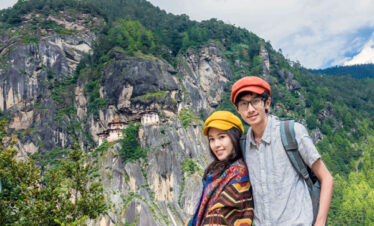
Today is a special day for you. Hike to Taktsang Monastery. It is also the route to the Bumdra Trek, where the Bumdra monastery showcases the mighty beauty of the Himalayas.
The Tiger Nest trail is well-paved and broad, entails approximately 3 to 3.5 hours of uphill walking, elevating you high above the picturesque Paro Valley. The Monastery itself is a remarkable feat, clinging to the sheer cliff face, positioned 900 meters above the valley floor.
In fair weather, the majestic peak of the sacred Mount Jomolhari (standing at 7314 meters) graces the background, offering a truly stunning backdrop. On your return journey to Paro, pay a visit to the 7th-century Kyichu Lhakhang, one of the 108 temples commissioned by the Tibetan king, Songtsen Gampo. Overnight stay at your Paro hotel, immersed in the beauty and history of this extraordinary region.
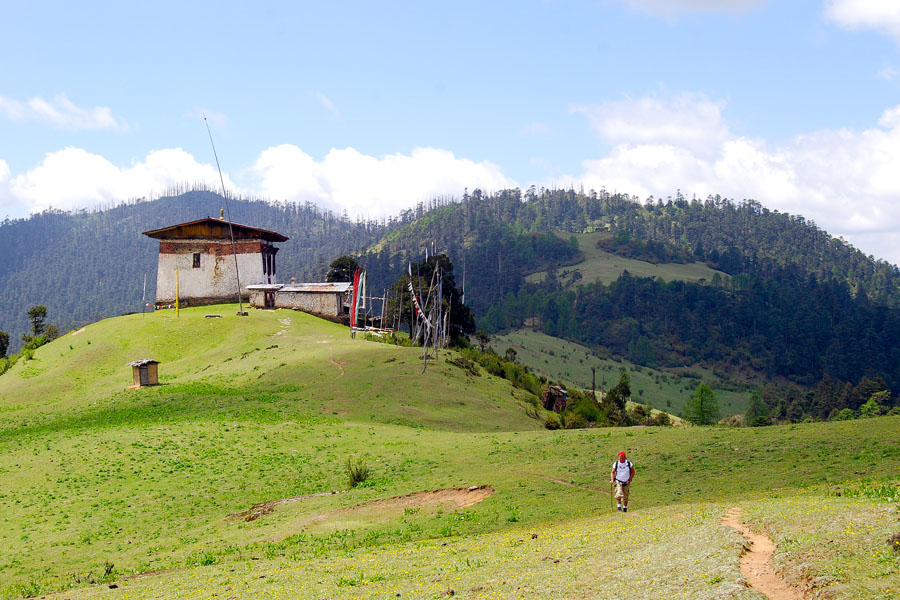
The most-awaited Trekking Tours start today. It is relatively brief, commencing with an ascent to Jele Dzong. It starts from Paro and goes to Tshokam. As you progress along the trekking trail, the elevation gradually increases, eventually leading to the campsite.
On a clear day, you might be treated to panoramic views of the Paro Valley, framed by majestic, snow-capped mountains. Above the campsite lies Jele La at an altitude of 3,400 meters, along with Jele Dzong. Additionally, a Lhakhang houses a revered statue of Buddha Shakyamuni.
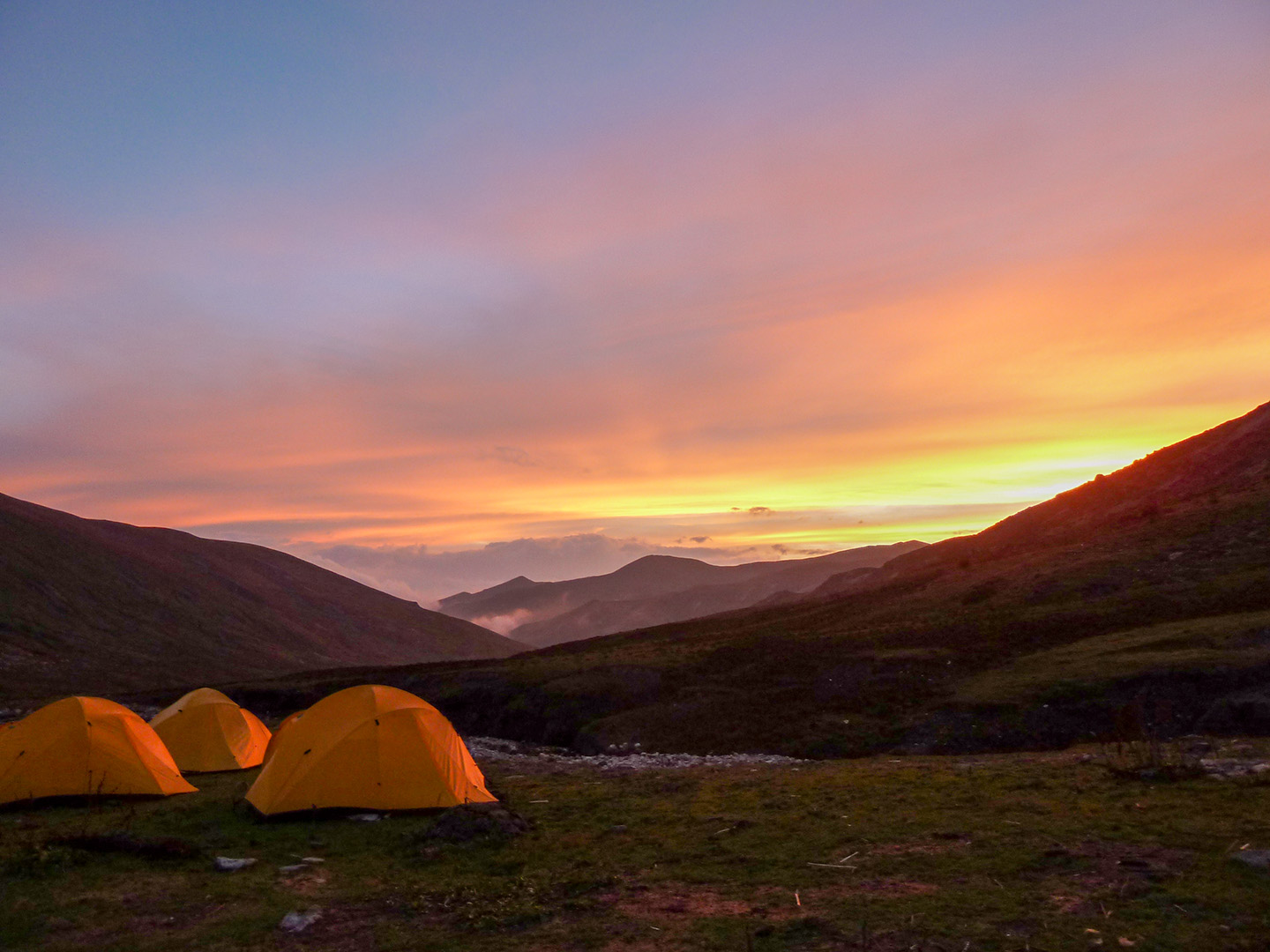
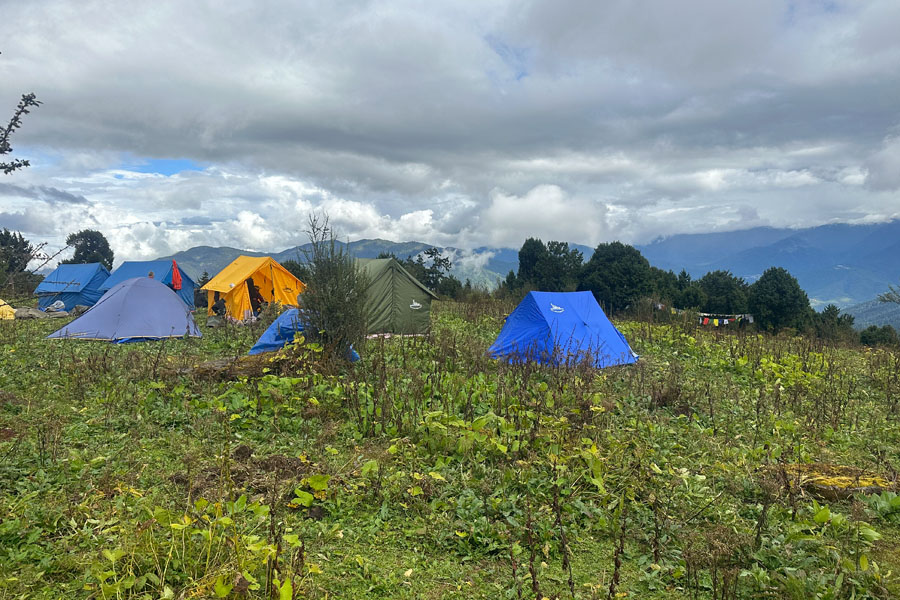
Your overnight stay will be at the Tshokam campsite, where you’ll be at an altitude of 4100 meters.
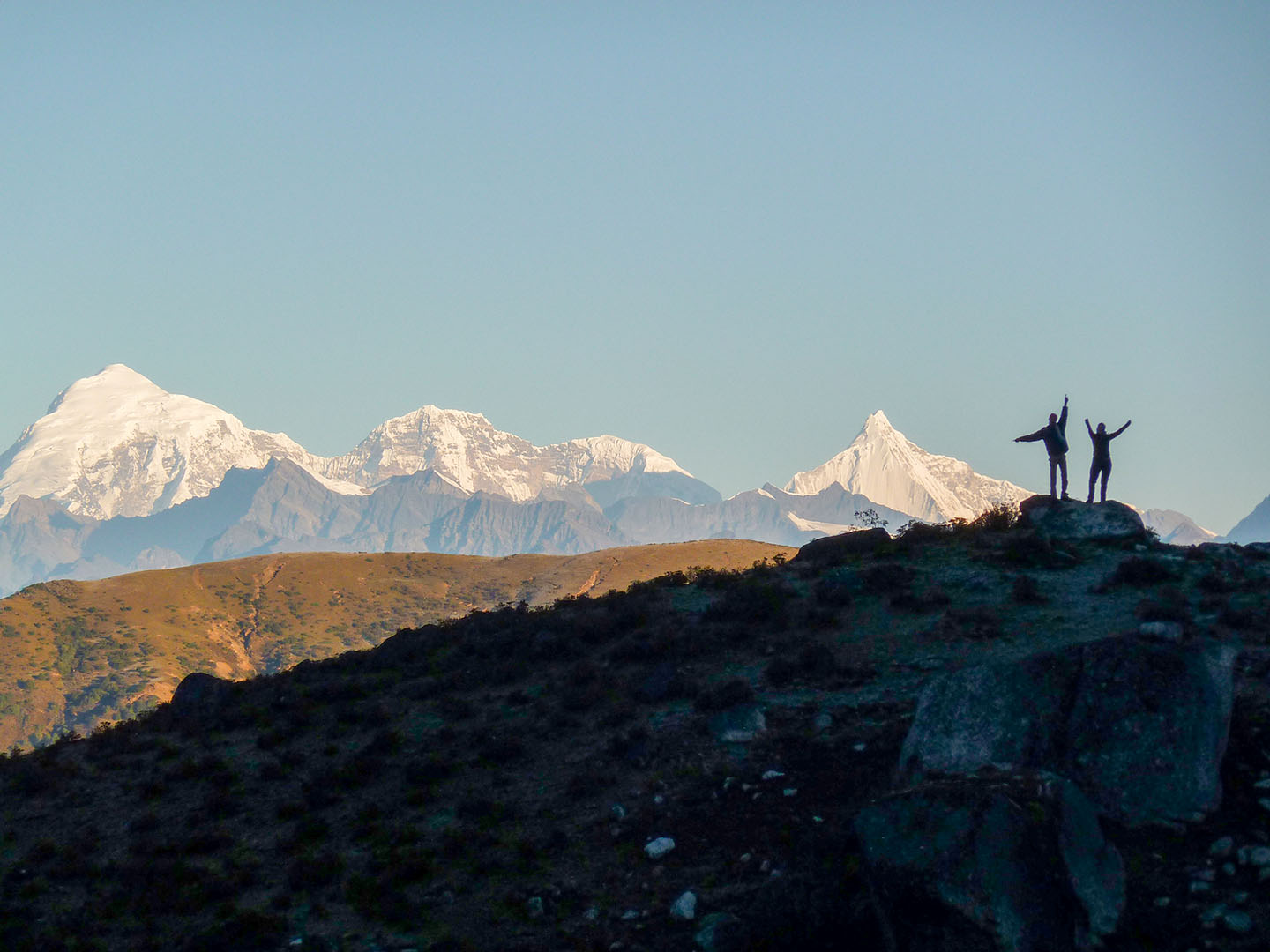
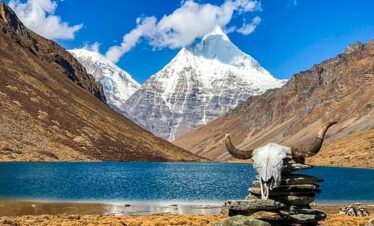
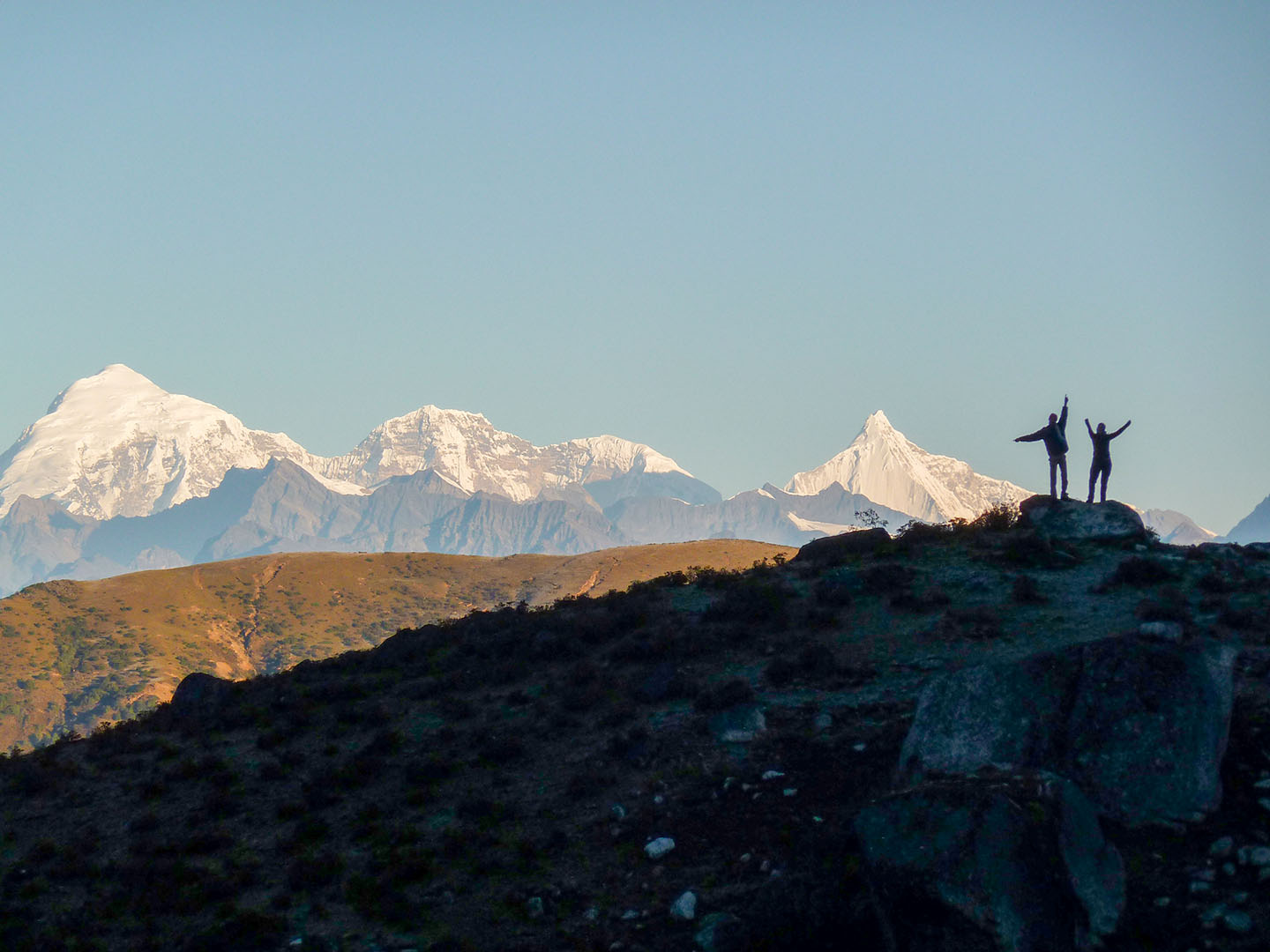
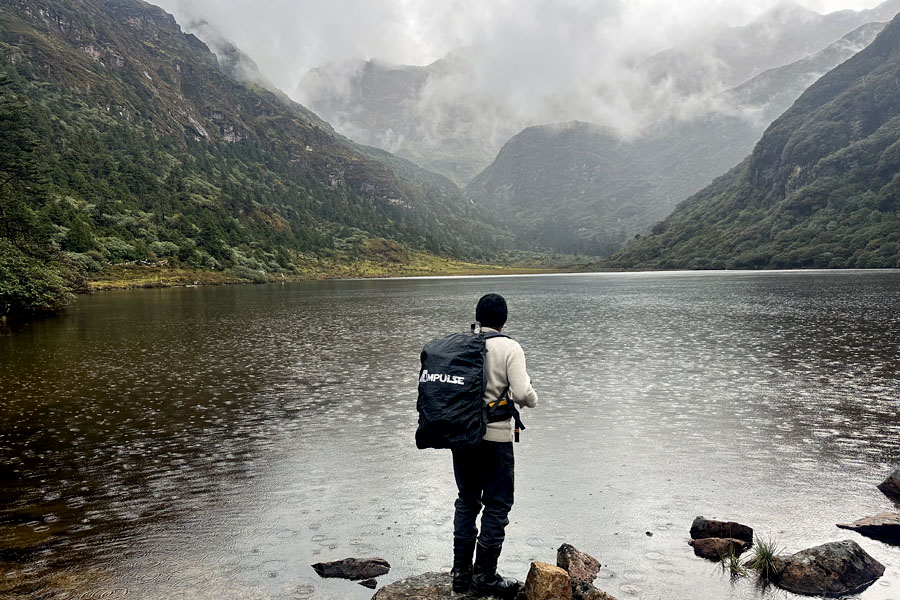
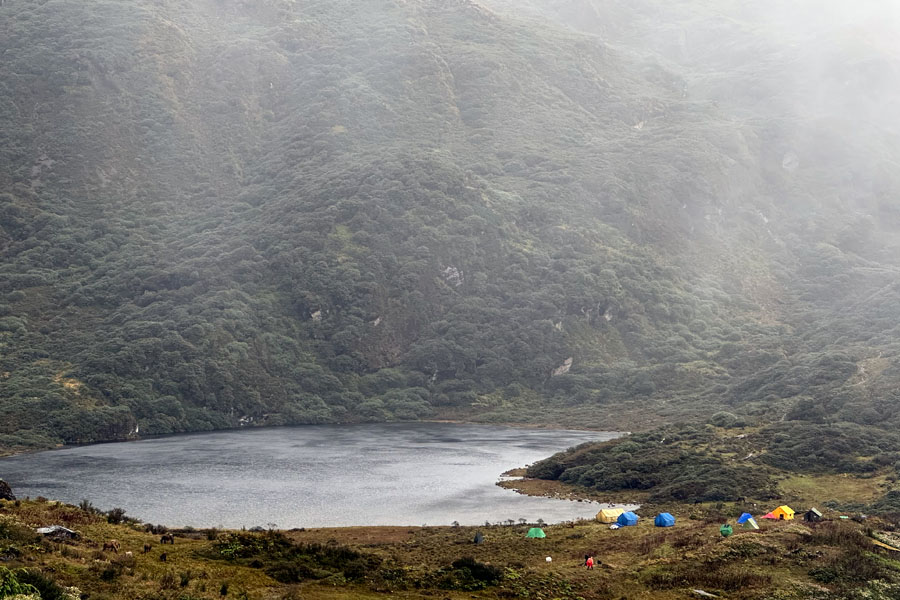
Start your day from Tshokam to Jany Tsho lake. The trail is challenging, an uphill ascent lasting around one and a half to two hours. The trail winds its way through dense alpine forests adorned with vibrant rhododendrons. Weather permitting, you’ll be treated to splendid vistas of Mt. Jhomolhari and other majestic, snow-draped peaks.
You might also come across yak herders in the vicinity of your campsite. Your overnight accommodation will be at the campsite, positioned at an altitude of 3,770 meters near Janay Thso Lake.
The trail begins from Janay Tsho to Labana. The path meanders along the ridge, offering truly breathtaking vistas of the mountains and valleys. The scenery is nothing short of sensational. Along the way, you’ll be treated to a magnificent sight of Mt. Jichu Drake, standing tall at 6,989 meters, symbolising the protective deity of Paro.
Your overnight stay will be at the Labana campsite, situated at an altitude of 3,870 meters. Since it's a short distance, if the weather is clear, you can explore Dungtsho Lake, which is about a 1.5-hour walk before the Labana Campsites.
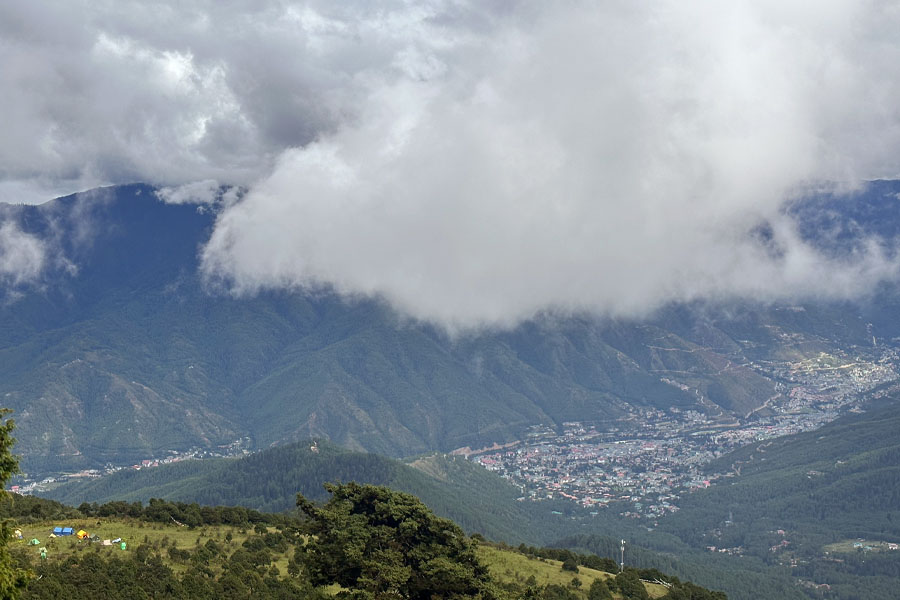
The trail starts from Labana to Phajoding. The trail guides us through enchanting rhododendron groves and past the serene Jimilangsho Lake. Along the way, you might chance upon the camps of yak herders. If you wish, with the help of your guide, you can engage with them to gain insight into their way of life.
Our overnight campsite is situated in proximity to Phajoding Monastery. You’ll spend the night at the campsite with monks and lama nearby the place.
The trek to Thimphu is downhill till the end, passing through the forested area of blue pines. Taking a leisurely pace, you reach Thimphu in about 3 hours. Afternoon at leisure. You can visit the marketplace if you want to with your guide exploring the handicrafts, restaurants, coffee Houses, etc. Overnight at your hotel in Thimphu.
Day excursion to Punakha. After your morning meal, drive to the Dochu-La Pass, situated at an altitude of 3,100 meters. On a clear day, this pass treats you to an incredible panoramic view of the Himalayan peaks before descending into the picturesque Punakha Valley, a journey of approximately 3 hours.
As you traverse the countryside, you’ll catch a glimpse of everyday life in one of the most remote regions of the Himalayan kingdom. The Dochu-La area boasts vast Rhododendron forests that burst into bloom during late April and early May, painting the mountains in a riot of glorious spring colours.
Visit Punakha Dzong, a remarkable fortress. Constructed in 1637 by the Zhabdrung, the ‘Unifier of Bhutan,’ this fortress is strategically located at the confluence of the Mo Chu and Pho Chu Rivers.
Visit Fertility temple located on a small hilltop overlooking Lobesa valley. Drive back to Thimphu.
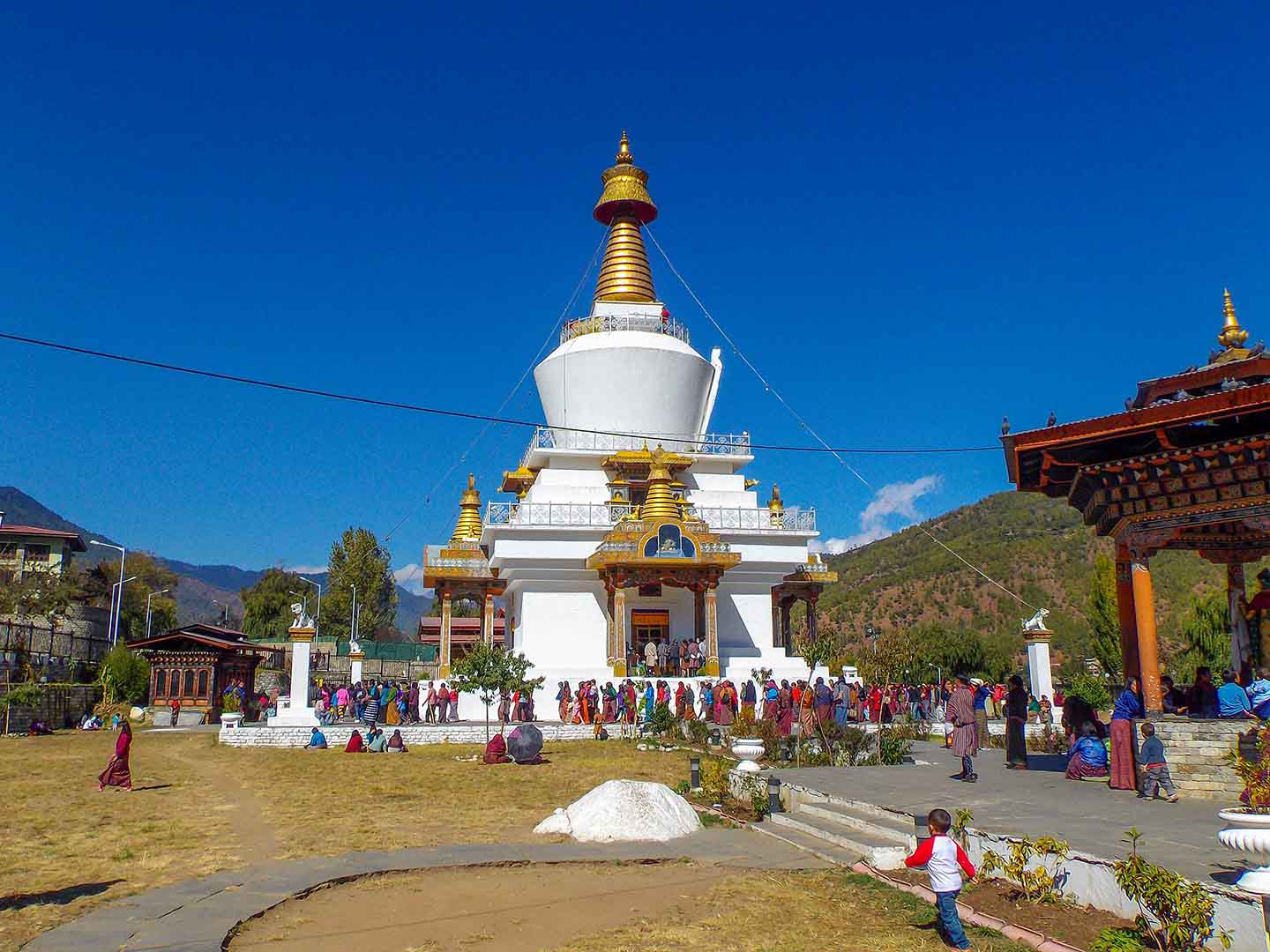
Enjoy sightseeing in Thimphu, beginning with a visit to the National Memorial Chorten, which depicts the Buddhist faith in the form of paintings and statues. This temple was first initiated by the Third King as a monument to world peace, but was completed by her Royal Queen Mother as a memorial stupa for the Third King, who passed away in the year 1972.
Visit the Choki Dorji Arts and Crafts School, where the students are taught to master the 13 different types of Bhutanese art.
In the evening, depart for Paro. Overnight at your hotel in Paro.
Breakfast in the hotel, then drive to the airport for flight to your onward destination.
Tashi Delek! Best wishes!
Inclusion / Exclusion
Inclusion
- All Meals [Breakfast /Lunch/Dinner]
- Accommodation in 3 Star Hotel.
- All transportation within the country including airport transfers.
- Entrance fees for Museums and Monuments only
- Visa Fee of USD 40 Per Person
- Airport tax
- Proffessional English speaking Guide.
- All Sightseeing in the country.
- Hotstone bath and visit to farm house.
- Complimentary Massage at 3 Star Hotel in Punakha at RKPO green Resort.
- All porter and Pony cost with cook.
- 3 meals a day,
- service of cook & Helper,
- Sleeping Tent,
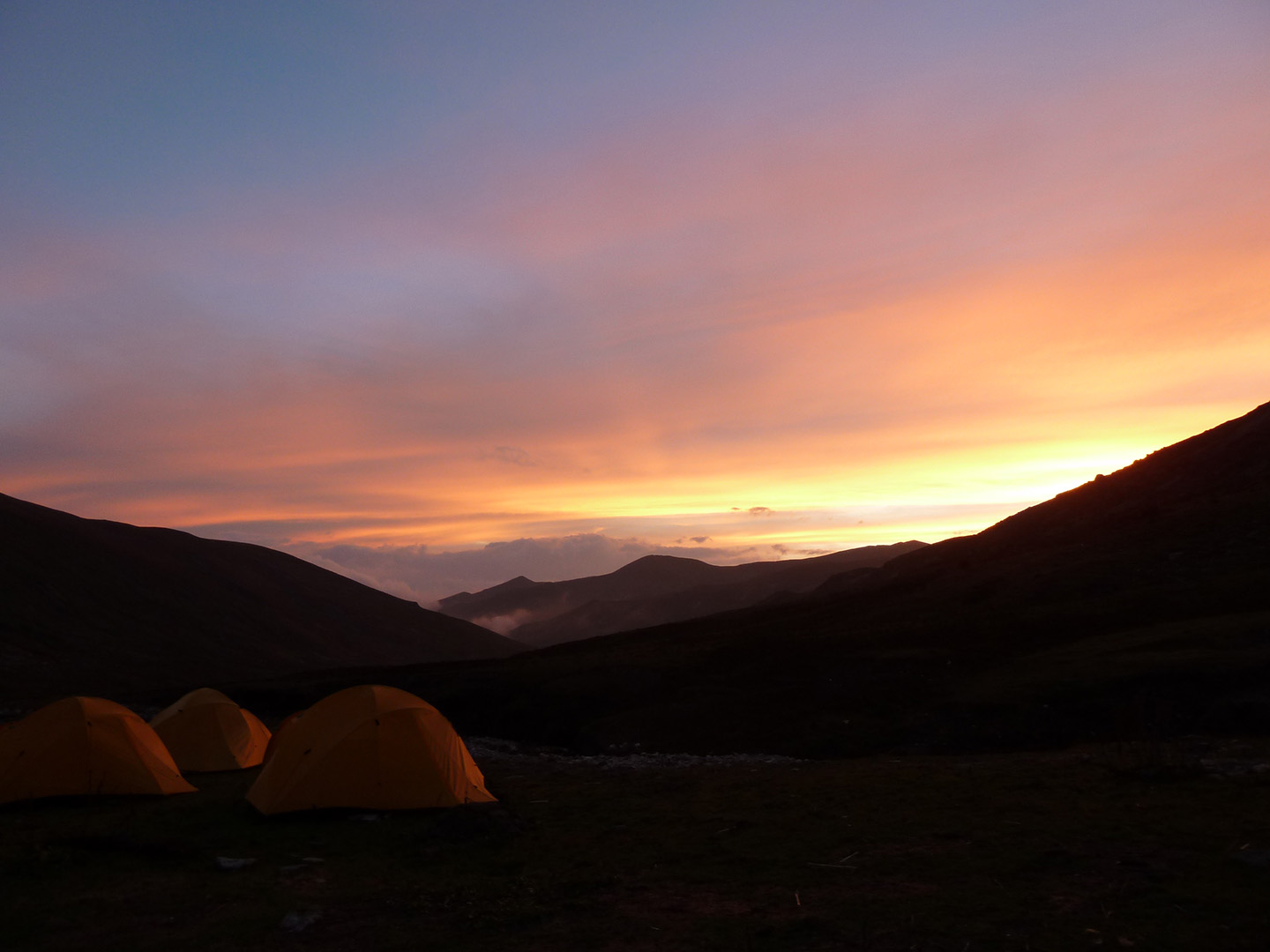
- Mess Tent, Kitchen Tent & Toilet Tent: A durable, lightweight, and weather-resistant tent suitable for high-altitude camping.
- Ponies to carry supplies,
- SDF of USD 100 per person per night.
- First Aid Kit: A comprehensive kit with essentials like bandages, antiseptic, and medications for altitude sickness.
- Camp Chair: A lightweight, foldable chair for comfort at the campsite.
Exclusion
- Flight fare
- Insurance Premiums
- Payments for service provided on a personal basis
- Cost for any services not mentioned in the "Cost Include head"
- Cost incurred due to mishaps, strikes, political unrest etc.
- Personal expense in items such as laundry, soft drinks, Camera Charges, Bottle water, incidentals, Portage, Bellboy charges tips or any other services
FAQs About Druk Path Trek
The Druk Path trek can be combined with Festivals and a cultural tour. You can combine with the Paro festival or the Thimphu festival.
Travel Gear: It is very important to pack lightly. No matter how long your trip is or where you are planning to go, it is always essential to pack with minimal amounts of clothes and other supplies. One medium-large backpack or rolling duffel and a day pack should be enough for a 2-4 week trip. Before getting on the plane, we recommend walking around the block several times with your bags and to see how it feels. If it feels heavy, then it would be wise to take out any nonessential items. Other items like gloves or socks can be purchased upon arrival.
Here are the essentials:
- 1 pair of Hiking Boots/Sturdy Sneakers
- Sleeping Bag and insulation pad optional
- Ground cloth or tarp (recommended but not required)
- Rain Gear (waterproof pants and jacket)Towel
- 3-5 T-Shirts
- 3-5 Pairs of Underwear and Sunglasses
- Personal Toiletries (you may want to carry your own toilet paper and some zip-lock bags, as bathrooms may not be readily available.)
- Personal Medication,Camera, Batteries and Film/Digital Memory Cards
- Adapter and Surge Protector.
- Light- weight thermal shirts or long underwear ( recommended but not required)
- Rucksack or kit bag to put overnight trekking kit in for horses to carry (may get a bit beaten up)
- Waterproof sac to put over your day pack and plastic bags to help segregate and organize things in kit bag
- Day pack (30 litres or so) to carry things you want access to during the day
- Sleeping bag – 3 season up to about 3000 metres, 4 season above that
- Silk liner for extra warmth
- Thermarest inflating mattress (if you feel you need extra padding – thin mattresses are provided)
- Inflatable pillow (if you find it more comfortable to have a head support when sleeping on flat ground)
Clothing (generally, layers of clothing make sense as temperature changes regularly)
- Trekking trousers
- Fleece pants or tracksuit to wear in camp
- T-shirts, long sleeve shirts, sweatshirt
- Thermal underwear (top and bottom) for night use
Outerwear during the Trek
- Down jacket if above 3500 meters
- Fleece
- Windproof jacket
- Waterproofs
- Scarf and gloves
Footwear During the Trek
- Hiking boots (should be water repellent)
- Sandals or trainers for use in camp
- Thick hiking socks and silk sock liners to guard against blisters
- Gaiters if trekking close to the monsoon season or in snow
Headwear during the Trek
- Broad brimmed hat or baseball cap for sun during the day with bandana for shading the neck
- Woollen hat or balaclava for evenings
- Polarising sunglasses – best to have the ones with side covers.
- Mosquitoes repellent cream.
Other Information
- Walking poles
- Head torch with spare batteries and bulbs
- Washing line
- Small knife
- Water bottles (preferably metal)
- Dextrose tablets, snack bars and energy drinks
Medicines to Take in Druk Path Trek
- Medicine for diarrhoea eg Immodium
- Rehydration sachets eg Dioralyte
- Paracetamol or Nurofen
- Plasters and Compeed for blisters
- Antiseptic cream
- Strepsils, Lemsip, cold and flu medicine
- Sting relief and Insect repellent
Toiletries etc
- Travel towel and sponge
- Soap and biodegradable liquid for laundry
- Toothbrush and toothpaste
- Toilet paper, tissues, wet wipes
- Sun cream (including total sun block)
- Lip salve
- Iodine tablets – or you can just use boiled water and on shorter treks mineral water
- Tweezers
- Camera, film and polarising filter
- Books, iPod, playing cards and other diversions for evenings.
The Druk Path trek is a popular and scenic trekking route in Bhutan. It offers trekkers the opportunity to explore the stunning landscapes, rich culture, and majestic mountains of the Himalayan kingdom.
The Druk Path trek usually takes around 5 to 6 days to complete, covering a distance of approximately 48 to 52 kilometers (30 to 32 miles) depending on the specific route and side trips taken.
The Druk Path trek is considered to be of moderate difficulty. While it does involve some steep ascents and descents, the trail is generally well-maintained, and the altitude gain is gradual, making it accessible to trekkers with a reasonable level of fitness and some prior trekking experience.
The Druk Path trek offers a range of highlights, including breathtaking views of the Himalayan peaks, serene alpine lakes, lush forests, and encounters with Bhutanese culture and villages. Trekkers often visit landmarks such as the Taktshang Monastery (Tiger’s Nest) and remote Drukgyel Dzong.
Yes, all tourists are required to hire a licensed tour guide when traveling in Bhutan. This regulation also applies to trekkers, so you will need to have a guide accompany you on the Druk Path trek.
Accommodation during the Druk Path trek typically involves staying in a combination of tents and basic lodges along the trail. While the lodges may not have the same level of comfort as urban accommodations, they provide trekkers with necessary amenities.
To trek in Bhutan, including the Druk Path trek, you need to obtain a trekking permit through a licensed tour operator. The tour operator will also assist you with other necessary permits for entering protected areas and cultural sites.
To trek in Bhutan, including the Druk Path trek, you need to obtain a trekking permit through a licensed tour operator. The tour operator will also assist you with other necessary permits for entering protected areas and cultural sites.
Packing essentials for the Druk Path trek include sturdy trekking boots, warm clothing (layers are recommended), rain gear, a good quality sleeping bag, a hat, sunscreen, insect repellent, a first aid kit, and personal items. Your tour operator or guide can provide more specific recommendations.
While the Druk Path trek does involve some altitude gain, the highest point on the trail is around 4,210 meters (13,810 feet), which is not extremely high. However, altitude sickness can still be a concern for some individuals. It’s advisable to acclimatize properly, stay hydrated, and be aware of symptoms of altitude sickness.
No, trekking in Bhutan requires a guide, and you must book your trek through a licensed tour operator. Independent trekking is not allowed to preserve the environment, ensure safety, and support local communities.
Tour Cancellation Policy:
- 90% refund for the tour cancelled 45 days prior to arrival date, payment transfer charges will be charged
- 75% refund for the tour cancelled between 30 to 45 days prior to arrival date
- No refund for the tour cancelled less than 30 days of arrival date and for the change of itinerary Booking made for 4* and 5* hotels have to follow individual hotel’s cancellation policies.
Flight Cancellation Policy:
- Thimphu Hotel Seven Suites located centrally in town and you can have access to all nightlife from this place.
- Punakha Hotel Zhiwaling
- Gangtey Hotel Phobjikha Resort 3 Star Hotel.
- Paro Metta Resort
- Bangkok
- Kathmandu
- Delhi
- Singapore
- Kolkatta
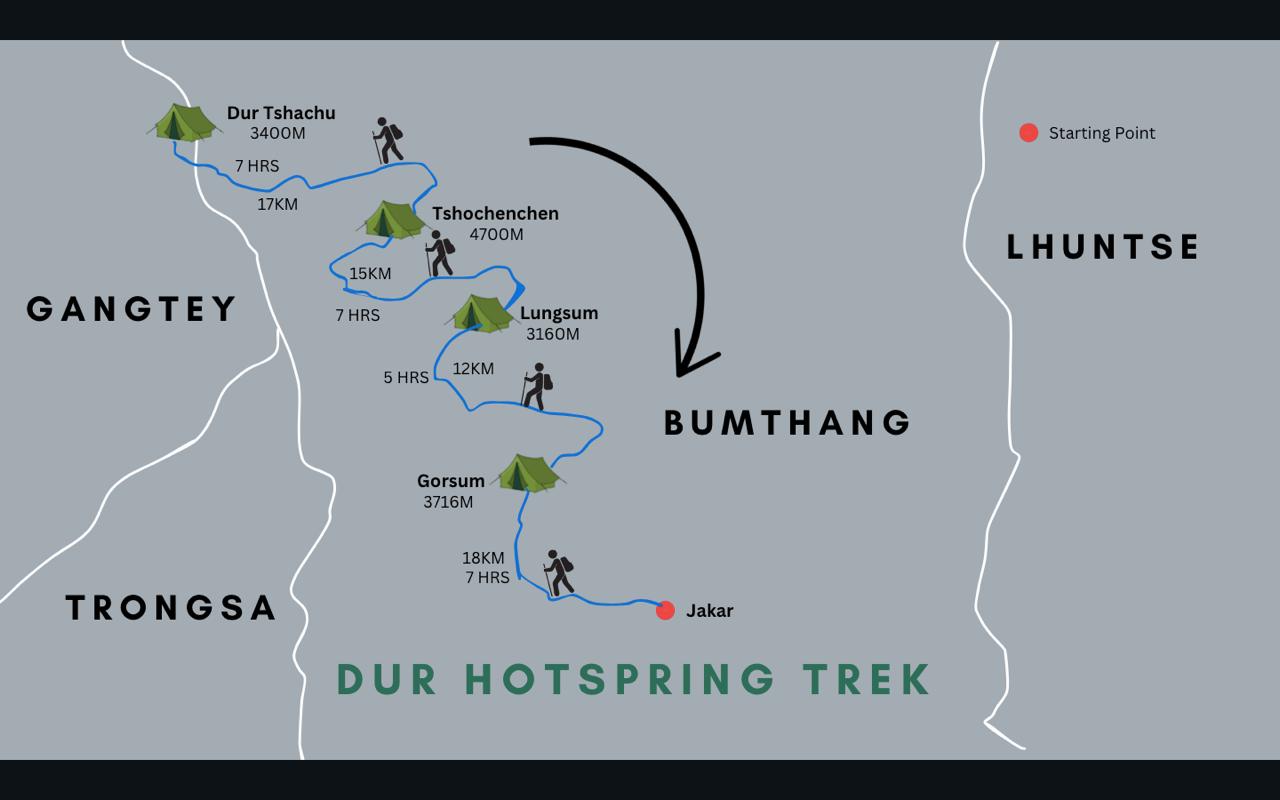
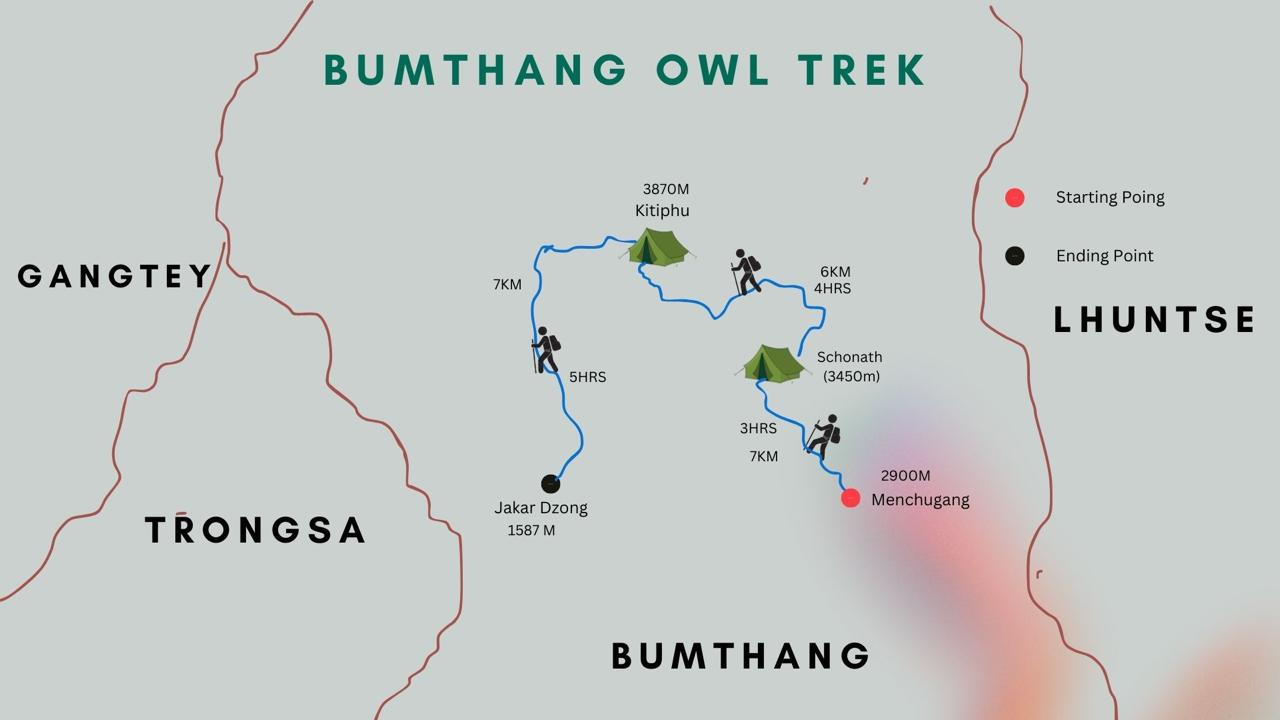
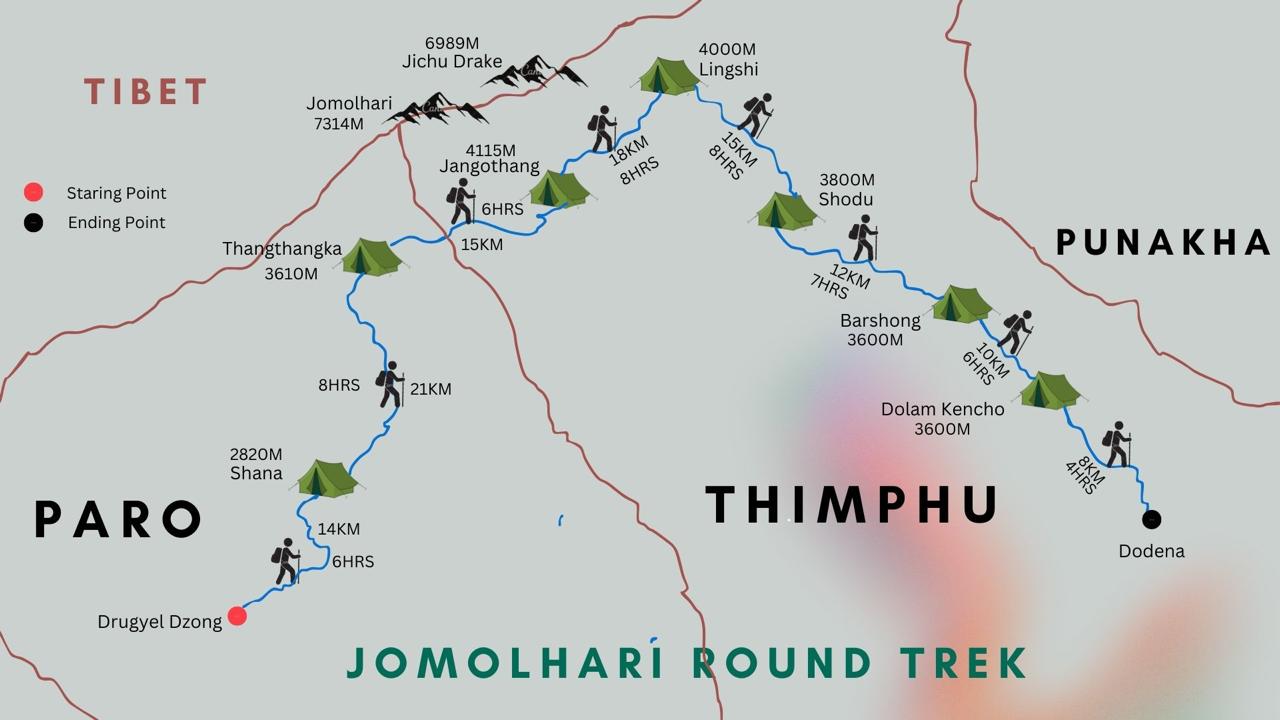
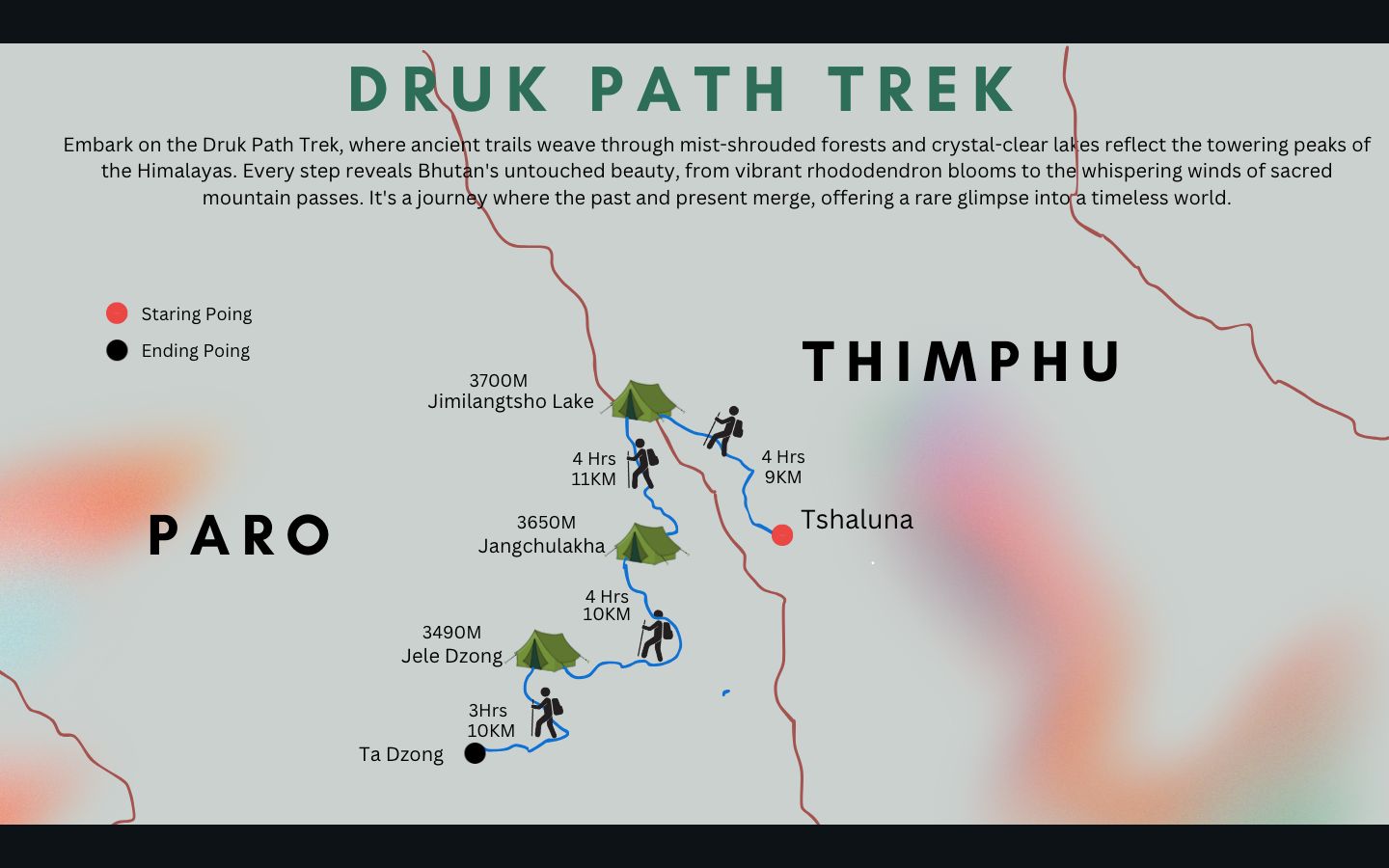
Druk Path Trek MAP
Hotels and Camp Sites
For Druk Path Trek 3 star Hotel will be used. A 3-star hotel in Bhutan offers a comfortable stay with essential amenities, blending modern conveniences with traditional Bhutanese charm. These hotels often feature cosy rooms, local décor, and friendly service. Located in scenic areas like Thimphu, Paro, or Punakha, they provide easy access to cultural sites and natural beauty. Many offer on-site dining with local cuisine, free Wi-Fi, and basic wellness facilities, making them ideal for budget-conscious travellers seeking an authentic Bhutanese experience. Read the Hotel Reviews
- Hotel Used in Thimphu Seven Suits
- Hotels Used in Punakha Zhingkham Resorts
- Hotel Used in Paro Rema Resorts
Trekking and Camping Equipment: Quality Camping equipment like Tents, Trekking Poles are used for the Druk Path Trek