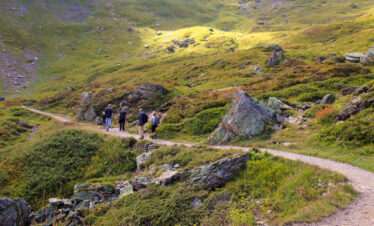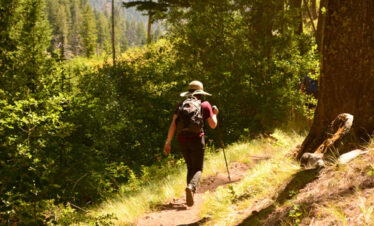
The Trek is the most difficult in Bhutan it crosses about 11 high passes and takes about 29 days to complete the trek. This Trek starts from Paro and ends in Bumthang Dur. We have two routes to complete the snowman Trek. The one ends in Sephu Wangdi which is the Snowman Trek I and a little shorter than this route.
- Cross the highest 11 passes during the trek in Bhutan.
- Challenge yourself on one of the longest 220-mile trekking in Bhutan.
- Starts from Paro and ends in Bumthang.
Snowman Trek II cost
- Solo trekkers cost USD 16900.00
- A Group of 2 pax Cost USD 13500 Per Person
- 2 to 4 Pax Group Cost USD 11500.00 Per Person
All our trek costs include a daily SDF of USD 100 per person, one time visa fee of USD 40 per person, trekking equipment, accommodation, a guide, transport, and meals.
Snowman Trek II Overview
The Snowman Trek Difficulty
The Snowman Trek in Bhutan is known for its extreme difficulty and is considered one of the most challenging treks in the world. Here are the key factors contributing to its difficulty:
Length and Duration: The trek covers approximately 300 kilometres (186 miles) and takes around 20 to 25 days to complete, depending on the itinerary and weather conditions.
High Altitude: The trek involves multiple high passes, some of which exceed 5,000 meters (16,404 feet). Altitude sickness is a significant risk, and acclimatization is crucial.
Remote Terrain: The trek traverses remote and rugged terrain, often far from any villages or support facilities. This isolation means that trekkers need to be self-sufficient and well-prepared.
Weather Conditions: The weather in the high Himalayas can be unpredictable and harsh, with sudden snowstorms, strong winds, and extreme cold, especially at higher altitudes.
Physical Demands: The trek requires excellent physical fitness and stamina. Long days of walking, steep ascents and descents, and carrying a heavy pack all contribute to the physical challenge.
Technical Sections: While the trek does not involve technical climbing, some sections can be steep, slippery, and require careful navigation, especially in adverse weather conditions.
Logistical Challenges: Organizing the trek requires meticulous planning, including obtaining permits, arranging for guides, porters, and supplies, and being prepared for emergencies.
Due to these factors, the Snowman Trek is recommended only for experienced trekkers with high-altitude trekking experience and excellent physical fitness.
Best Season to Do the Trek in Bhutan
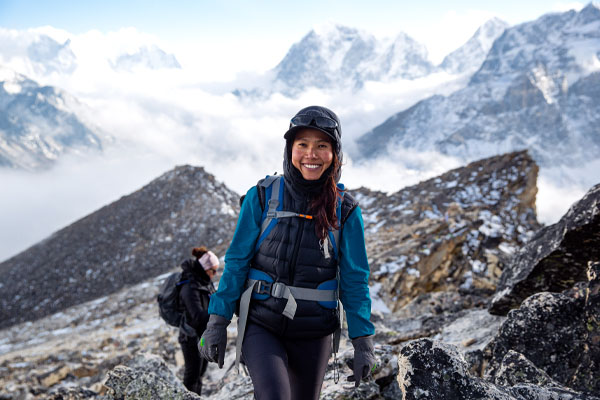
The best season is Autumn starting from September to December. Snowman Trek is not advised for the Spring season. Spring is just the beginning of Peak winter months and most of the passes are still closed due to heavy snowfall. The snow season in the mountains lasts till early June. Little rainfall on the plane cause Snowfall in the mountains causing the closure of the trek routes.
Note* You should prepare yourself for the Snowman Trek before the commencement of the trek.
Flights to Bhutan: There is a daily flight from Kolkatta, Kathmandu and Bangkok. Check the flight schedule
The Trek II Itinerary Overview
- Day 1 Arrival Paro International Airport. Altitude 2300M.
- Day 2 Relaxation and Acclimatization at Paro Valley
- Day 3 Start Trek from Paro to Shana. Distance 17 km | Walking Time 6/7 Hours. Camping Alt 2870M.
- Day 4 Shana to Thathangka. Distance 22 km | Walking Time 8/9 Hours | Camping Alt 3610 M.
- Day 5 Thathangka to Jangothang. Distance 19Km | Walking Time 7/8 Hours | Camping Alt 4040M.
- Day 6 Jangothang Halt and relax. Altitude 4115M.
- Day 7 Jangothang to Lingshi. Distance 18 km | Walking Time 6/7 Hours | Camping Altitude 4010M.
- Day 8 Lingshi to Chebisa. Distance 12Km | Walking Time 4/5 Hours | Camping Altitude 3850M.
- Day 9 Chebisa to Shomuthang. Distance 17Km | Walking Time 6/7 Hours | Camping Altitude 4250M.
- Day 10 Shomuthang to Robluthang. Distance 18Km | Walking Time 6/7 Hours | Camping Alt 4200M.
- Day 11 Robluthang to Limithang.Distance 19 km | Walking Time 7/8 hours | Camping Altitude 4140M.
- Day 12 Limithang to Laya. Distance 10Km | Walking Time 3/4 Hours | Camping Alt 3850M.
- Day 13 Explore Laya Village. Altitude 3800M.
- Day 14 Laya to Rodophu. Distance 19Km | Walking Time 7/8 Hours | Camping Alt 4350M.
- Day 15 Rodophu to Tarina. Distance 36Km | Walking Time 10/11 Hours | Camping Alt 3980M.
- Day 16 Tarina to Woche. Distance 17 km | Walking Time 6/7 Hours | Camp Altitude 3800 M.
- Day 17 Woche to Lhedi. Distance 17Km | Walking Time 6/7 Hours | Camping Altitude 3650M.
- Day 18 Lhedi to Thanza. Distance 17 km | Walking Time 6/7 Hours | Camp at 4000M.
- Day 19 Thanja to Tsorim. Distance 14Km | Walking Time 5/6 Hours | Camping Alt 5125M.
- Day 20 Tsorim to Gangkar Puensum Base Camp.Distance 10 Km | Walking Time 4/5 Hours | Camping Alt 4970M.
- Day 21 Gangkar Puensum Base Camp Halt
- Day 22 Base Camp to Geshe Woma.Distance 12 Km | Walking Time 4/5 Hours | Camping Alt 4200M.
- Day 23 Gesewoma to Warathang.Distance 13Km | Walking Time 5/6 Hours | Camping Alt 4000M.
- Day 24 Warathang to Dur Hotspring.Distance 8Km | Walking Time 4/5 Hours | Camping Alt 3900M.
- Day 25 Dur Hotsprig to Tshochenchen.Distance 13Km | Walking Time 5/6 Hours | Camping Alt 3850M.
- Day 26 Tshichenchen to Jakar Bumthang.Distance 8Km | Walking Time 4/5 Hours | Altitude 2800M.
- Day 27 Bumthang to Wangdi. Distance 80 Km | Driving Time 2 Hours and 20 Minutes.
- Day 28 Wangdi to Thimphu. Distance 80Km | Driving Time 3 Hours.
- Day 29 Thimphu City Tour. Altitude 2400M.
- Day 30 Thimphu to Paro International Airport and See Off. Altitude 2300M.
Similar Trekking Tours
Snowman Trek II Highlights
- Challenge yourself to one of the hardest Trek in the World.
- Visit the tribal village of Laya.
- Camp at the highest Mountains of Bhutan.
- Enjoy watching the wildlife of Bhutan as the trek falls on protected areas.
- Watch wildflowers and blue poppy(national flower of Bhutan).
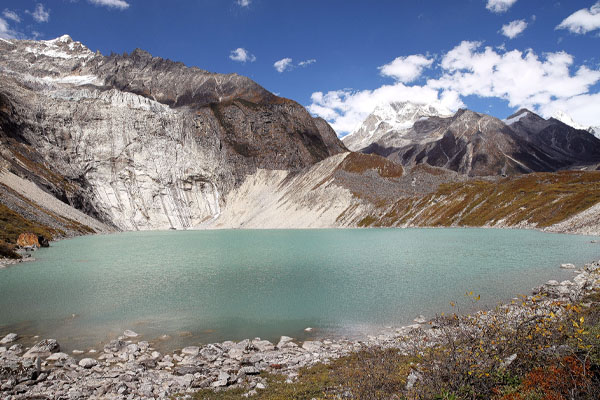
- Discover the highest mountains and crystal clear lakes of Bhutan.
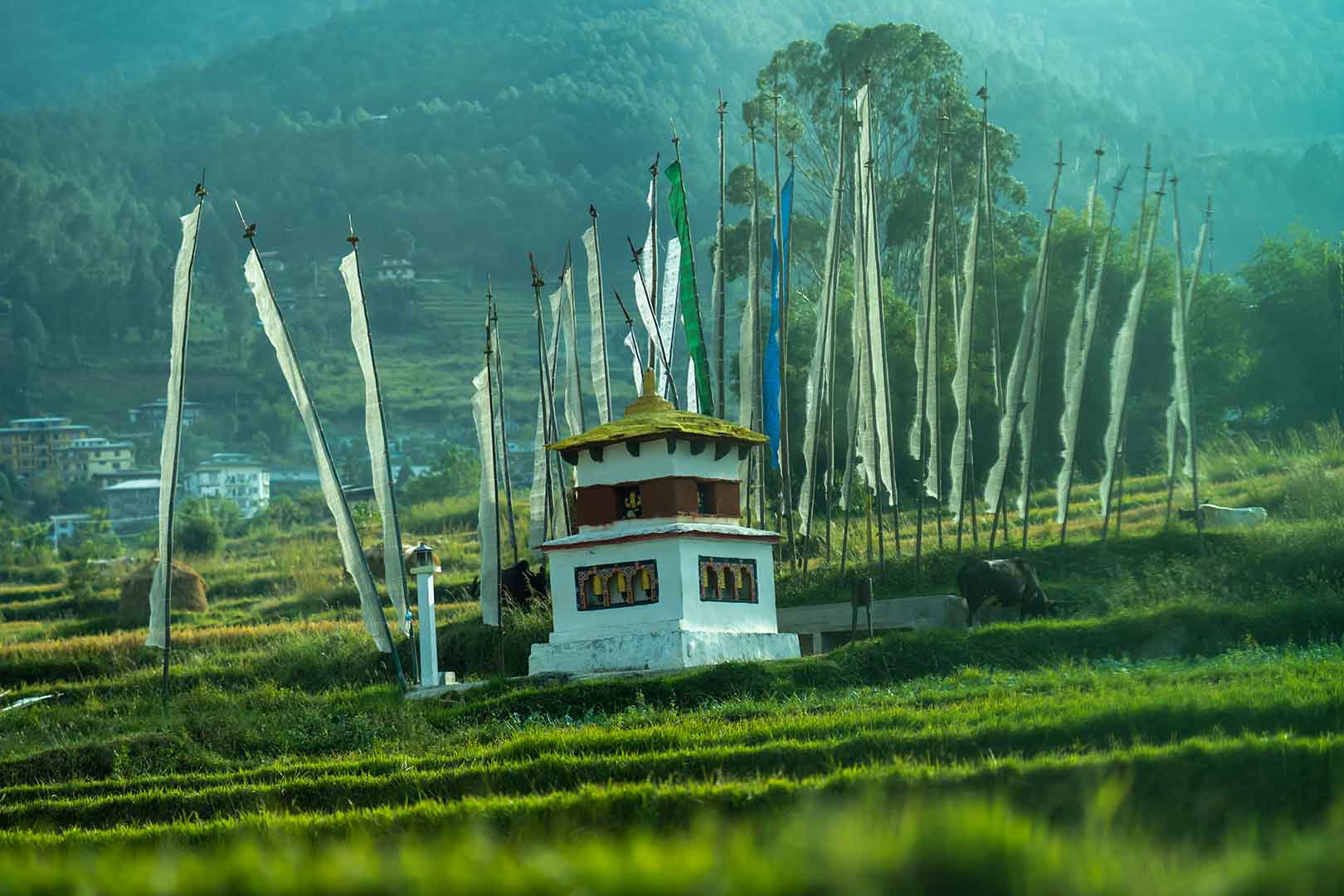
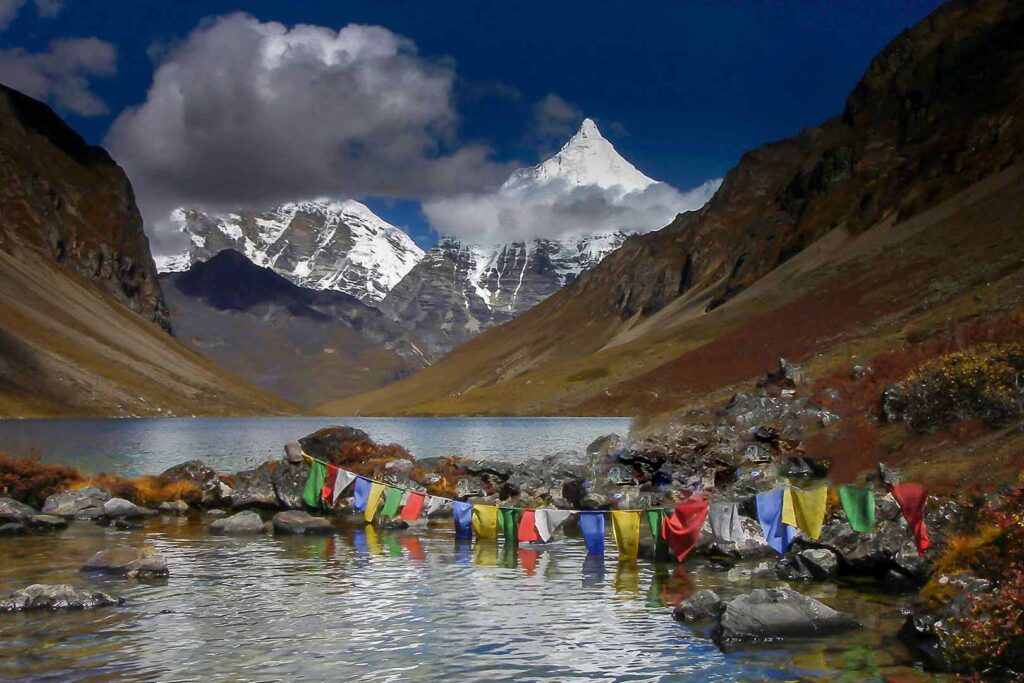
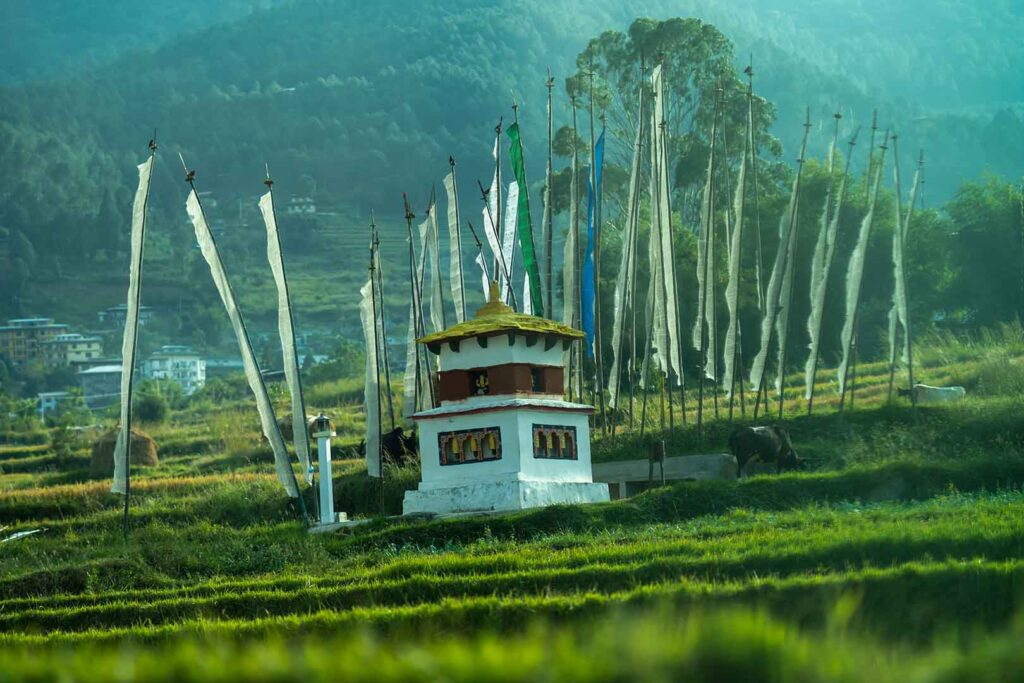
- Hoist the prayer flag on the highest mountain pass of Bhutan.
- Cross highest 11 passes during the Snowman trek in Bhutan.
- Challenge yourself on one of the longest 220 miles trekking in Bhutan Experience the ancient tradition and culture of Bhutan.
- Explore the largest Lake of Bhutan in Lunana.
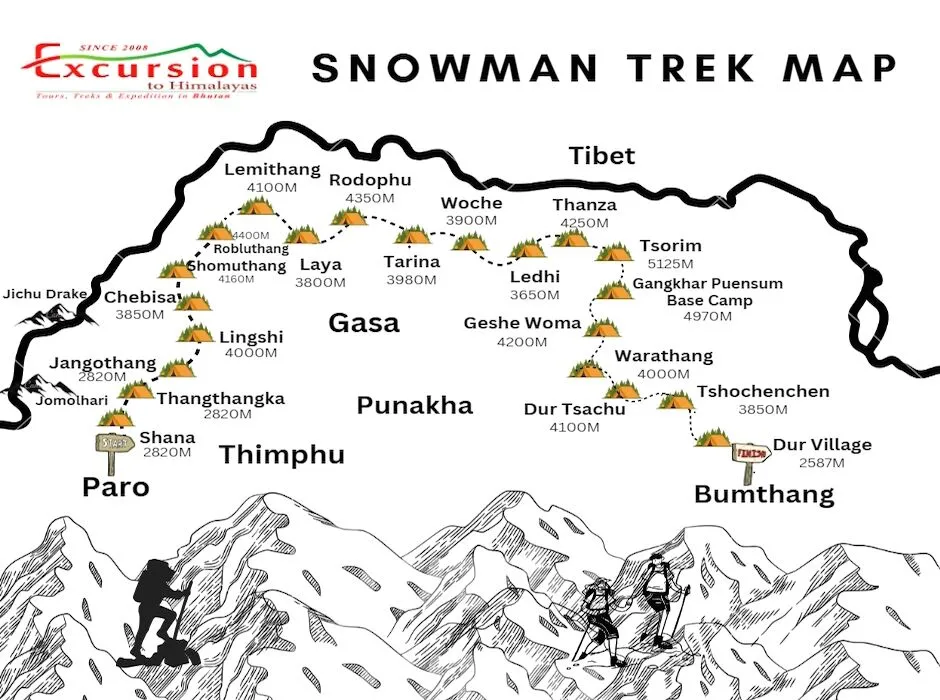
The Snowman Trek II Detail Itinerary
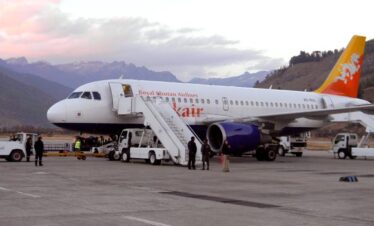
The start of Snowman Trek in Bhutan Arrival at Paro International Airport. Landing at Paro International Airport is an unforgettable experience. As your flight navigates between two mountains, following the Paro River toward the small strip of the airport, the views are mesmerizing. Upon landing, our team will receive you with white Khadar and brief you about the Trek.
Before starting the Bhutan Snowman Trek, you need time to acclimatize. Today, our guide will take you to Drugyel Dzong (Victory Dzong), one of Paro's most iconic structures. On a clear day, you can see the beautiful snow-capped Jomolhari Mountain. Next, visit the 8th-century Kyichu Lhakhang. In the evening, enjoy leisure time in the small town of Paro. Your guide will brief you about the trek starting the next day.
Distance: 17Km
Ascent: 360m
Descent: 80m
Today, we begin one of Bhutan's longest and most challenging treks. Before setting off, we pray for a safe and successful journey. Starting from Drugyel Dzong, we follow the Paro River, eventually camping at Shana, which sits at an altitude of 2,870 meters. We cover 17 kilometers, trekking for about 6 to 7 hours.
Distance: 22Km
Walking time: 8-9 Hours
Ascent: 770m
Descent: 10m
Our fourth day of trekking from Shana to Thangthangka is spectacular. The trail follows the Paro River through beautiful forests, passing a few isolated nomadic huts. The route reaches a junction where another path leads to Tremo La and Tibet. We camp here at the junction in a meadow with a stone shelter, at an altitude of 3,610 meters. This leg covers 22 kilometers and takes about 8 to 9 hours to complete.
Distance: 19Km
Walking time: 6/7 Hours
Max Altitude: 4040m
Ascent: 480m
Descent: 1090m
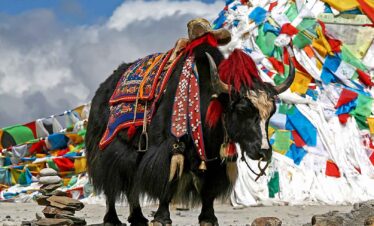
Today's route offers a unique experience. After crossing the army post and presenting your permit, you'll gradually ascend into a beautiful valley, passing Tegethang, the winter home of yak herders. Expect to see many yaks as you approach the base of the stunning Jomolhari Mountain. You'll also encounter the ruins of an old fortress, once used to guard Bhutan against Tibetan invasions. We'll camp at the base of Jomolhari Mountain at an altitude of 4040 meters.
Today, you'll rest at the campsite and enjoy the stunning 360-degree view of Jomolhari Mountain. If you're feeling energetic, you can explore the area with beautiful day hikes. One highlight is the hike to Tshophu Lake, about a 1.5-hour walk from Jangothang. The lake is well-stocked with brown trout, so if you're a fisherman, be sure to bring your gear. This day is optional, allowing you to relax or explore as you wish.
Distance: 18Km
Walking time: 6/7 Hours
Max Altitude: 4700m
Ascent: 840m
Descent: 870m
The day begins with following the steam for half an hour before crossing the bridge to the right side which climbs up to the first ridge of the amazing view of Mt.Jumolhari(7316m), Mt. Jichu Drakey (6714M) and Mt. Tserim Ghang. Walk further towards the flat valley until you climb Nyila Pass (4700m). After the pass Gradual descent to Lingshi Camp. Here you also come across local villagers and a view of Lingshi Dzong. The Campsite altitude is 4010m.
Distance: 12Km
Walking time: 4/5 Hours
Ascent: 280m
Descent: 400m
Today is a very easy and pleasant walk through villages and Yak Herder’s camp. Your lunch will be served at Goyuna village which is very scenic. After lunch, you reach Chebisa village and the people here are very friendly. We camp here by the side of the stream at an altitude of 3850m. Walking time is 4-5 hours.
Distance: 17Km
Walking time: 6/7 Hours
Max Altitude: 4500m
Ascent: 890m
Descent: 540m
You day starts with steep climb up towards Gubula Pass at an altitude of 4500m taking 4 hours hard walk. After reaching the top descend the trail through beautiful rhododendrons forest. Continue to follow the stream until you reach at the campsite. You may come across Yak Herders and wild blue sheep of the Himalayas. Walking time is 6 to 7 hours. Camping at 4250m.
Distance: 18Km
Walking time: 6/7 Hours
Max Altitude: 4600m
Ascent: 700m
Descent: 760m
Starts with a steep climb to Jarila Pass at an altitude of 4600m. Descend to Tsharijathang one of the most beautiful and broad valleys. This valley is also the summer residence of Wild Himalayan Takin. Lunch shall be served here and further walk towards the campsite. Cross stream and towards the left the trail ascends till you reach the Robluthang Campsite at an altitude of 4200m. Walking time to 6 to 7 hours.
Distance: 19Km
Walking time: 7/8 Hours
Max Altitude: 4160m
Ascent: 850m
Descent: 870m
Everyday you will be climbing the pass and today you shall cross Shinje La pass(4900m). The view from the pass is amazing. The descend towards Limithang is quite narrow but you will be rewarded with beautiful view of Mt. Gangchey Ta Peak(6794m) on the last part of the trek. Arrival campsite is 4140m.
Distance: 10Km
Walking time: 4-5 Hours
Ascent: 60m
Descent:340m
Your morning will be welcomed by the majestic view of Mt. Gangchey Ta Peak in front of you. Today you shall be greeted by the nomadic herders of Laya. Laya is the second-highest settlement in the country. Camp site is near the local village house. Campsite at 3850m. Walking time is 4 to 5 hours.
Walking time: Relax Day
Max Altitude: 3800m at Laya
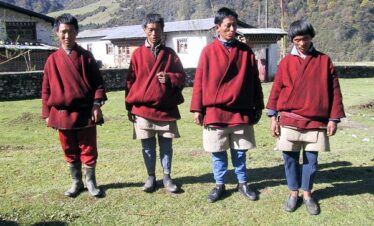
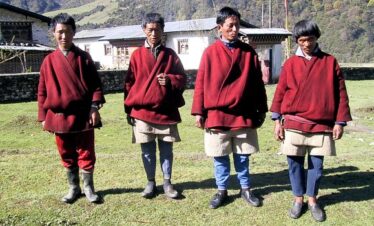
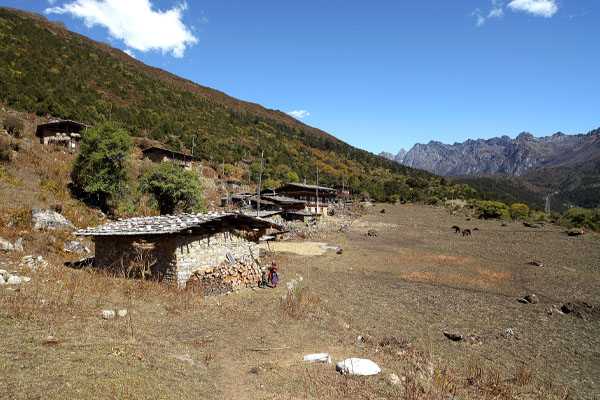
Explore the village. The Laya village consists of around 800 people. They have different dresses and the language they speak is different. The government is doing everything to protect the tradition and culture of this small Northern village. They are the tribal people of Bhutan.
Distance: 14.5Km
Walking time: 7 to 8 Hours
Max Altitude: 4350m
Ascent: 975m
Descent: 70m
Start your journey from Laya Village. You will come across beautiful girls working in their field and they may wave their hand to say goodbye. Descend to the army camp and now the road has reached the camp site. Since the route is different we follow the river towards the left. Continue the climb through rhododendron bushes until the camp. Altitude 4,350m.
Distance: 36Km
Walking time: 10/11 Hours
Max Altitude: 5080m
Ascent: 725m
Descent: 1200m
Today is the longest day trek crossing two pass of Tsimola(4700m) and Gangla Karchula Pass(5080m). We start as early as 5 in the morning because it’s 10 to 11 hours of trek. The route offers a view of Lunana Village and a close view of Mt. Jumolhari and Mt. Jichu Drake.
The whole range of mountains, including Masagang, Tsendegang, and Teri Gang can be seen, after the pass, there is a very long descent to Tarina valley. Altitude 3,980m. Walking time 10-11 hours.
Distance: 17Km
Walking time: 6-7 Km
Max Altitude: 3910
Ascent: 270m
Descent: 330m
The trek is easy today as the path follows the river downhill. The lunch point is at 3500m and after lunch climb 300m towards the small village of woche. Camp at 3800m and walking time is 6 to 7 hours.
Distance: 17Km
Walking time: 6 to 7 Hours
Max Altitude: 3700m
Ascent: 980m
Descent: 1190m
The day begins through juniper and fir forest and rhododendron bushes. Another climb to Kechila Pass(4480m) offers a great view of snowcapped mountains. After the pass, descend to the river walking through the village with stunning views of Table Mountain and others. Follow the river, one of the main sources of Phochu, till Lhedi village. Altitude 3,650m.
Distance: 17Km
Walking time: 6-7 Hours
Max Altitude:
Ascent: 450m
Descent: 0
The trek continues following the river, rising gradually to Choejong village. After lunch visits the Choejong dzong and continues towards the wide valley. Cross the bridge to reach Thanza camp 4,000m.
The trek starts with climb up to the ridge with a great view of the Table Mountain and Thanza valley below, The ridge altitude is 4,500 m and rises gradually up to 4,650m near the footbridge. After lunch walk up towards the left side of the bridge enjoying the views of the snow peaked mountains. Climb up ridge after ridge until you reach the camp at Tsorim at an altitude of 5,150m. Then down to the camp at 5125m. Walking time 5-6 hours.
This is the highest of the trip and we start the day with a short climb to the Tshorim lakes. Walk on the side of the lake enjoying the panoramic views of the Gophula ranges. The last climb to Gophula pass (5,230m) is very short. After the pass descend to the base camp walking along the ridge. Enjoy the great view of Gangkar Puensum. Those with a lot of energy can divert to the left side to climb up the Pyramid Peak for better view. Others can go down to the base camp nearly Sha Chu at the altitude of 4,970m. Walking times 4-5 hours.
Rest Day at Gangkar Puensum. One of the highest unclimbed mountains of Bhutan. Mt. Gangkhar Puensum lies on the border between Bhutan and Tibet. After Bhutan was opened for mountaineering in 1983, four expeditions resulted in failed summit attempts in 1985 and 1986. In 1999, a Japanese expedition successfully climbed Liankang Kangri, a 7,535 metres (24,721 ft) subsidiary peak (not an independent mountain), separated from the main peak by a 2 kilometres (1.2 mi) long ridge to the north-northwest but had to turn around when their permit was revoked.
In 1994 Bhutan banned the climbing of peaks over 6,000 metres and since 2003, all mountaineering has been banned in Bhutan. This approach of protecting nature as it is makes the Bhutan wonderful to visit and worth paying for.
Time to leave the beautiful mountains, but the trek is far from over. The path follows the Sha Chu and descends gradually to Geshe woma at the altitude of 4,200m. Walking time 4 to 5 hours.
The path continues following shachu for two and a half hours until the stiff climb to Sakala begins. Visibility along the Sakala trail is poor so one must watch the top of the ridge for guidance. Lunch nearby a yak herder’s camp. After lunch climb up to Sakala pass at the altitude 4,800m. Descend to the lakes and another short ascent to Wartangle pass (4,590m). The scenery once again is stunning with small lakes and mountain peaks. Camp at the altitude of 4,000m.
A short half-hour climb to Juelela (4,400m). After the pass descend to the riverside through dense rhododendron, juniper and conifer forest. After the bridge a little climb to Dur Tsachu hot spring, where Guru Padmasambhava is supposed to have bathed in the 8th hot spring. You can also check the popular Dur Hotspring Trek which explores the hotspring in Bumthang.
Today we go across the last pass of the trip (Juelela pass). From the stream, it is a long and steady climb again with great views of the mountains in Lunana. One comes from blue lakes and yak herders camps to arrive at the Thochechen camp at an altitude of 3,850m. Walking time 5 to 6 hours.
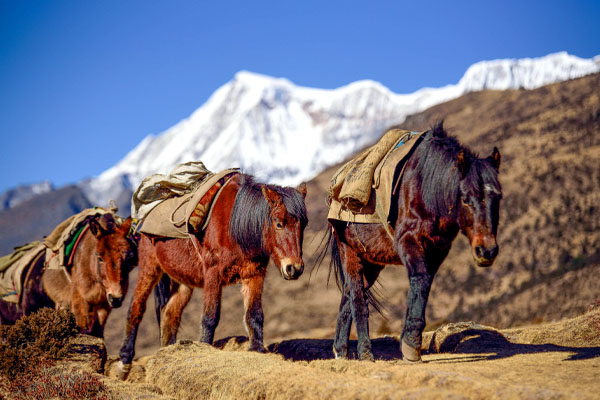
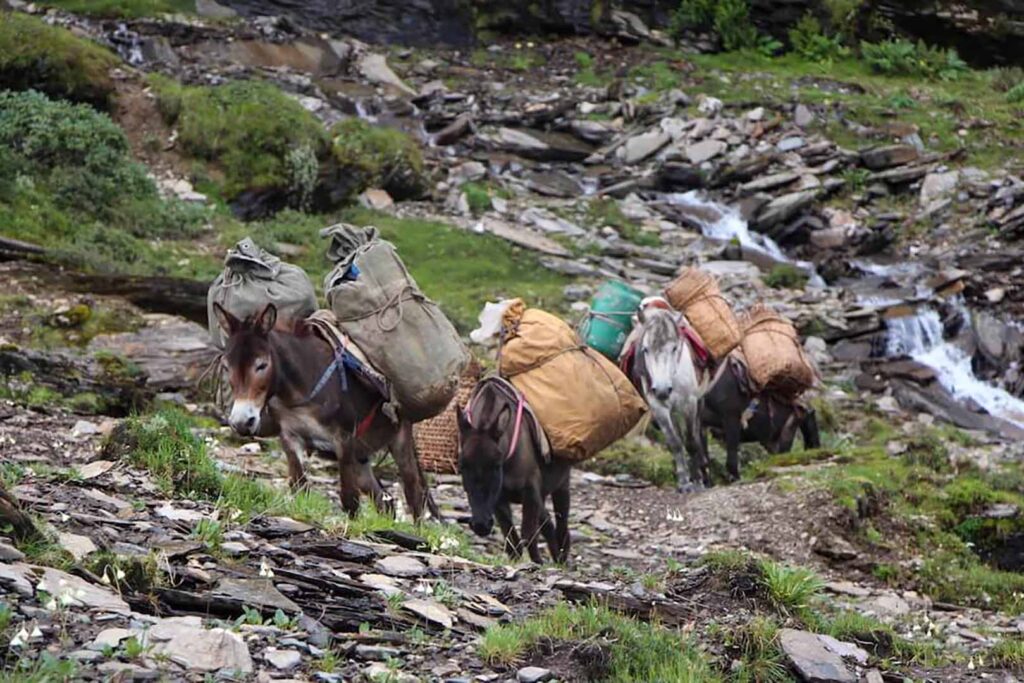
This is the last day of the trek. Here we change from yak to pack ponies for carrying trekking gear. The path follows the Chamkhar Chu, descending gradually with few climbs. The trek ends when you arrive at Dhur village.
Start early to visit some of the famous monasteries in Bumthang and drive to Trongsa (70km) for lunch at the local hotel. After lunch drive to Wangdi (130km) via Pelela. Overnight at the lodge.
On the way visit Dochula Pass overlooking ranges of Mountains. Get a cup of hot coffee and enjoy the view of the Himalayas. You can visit the Dochula Cafe which offers best Coffee.
Thimphu Tour includes a visit to Thimphu weekend Market, Simply Bhutan Museum and most popular Bhuddha Statue.
Your Snowman Trekking ends today. Our team from Tour Bhutan will see you off. The drive takes about 1 hour from thimphu to Paro International airport.
Inclusion / Exclusion
Inclusion
- Mess Tent, Kitchen Tent & Toilet Tent
- Ponies to carry supplies
- Guide, Sleeping Tent
- Service of cook & Helper
- All Meals [Breakfast /Lunch/Dinner]
- Accommodation in 3 Star Hotel [Twin Sharing Single Room Supplement Extra US $: 40 per room per night].
- All transportation within the country including airport transfers
- Royalty & Govt. Taxes
- Entrance fees for Museums and Monuments only
Exclusion
- Insurance Premiums
- Payments for service provided on a personal basis
- Cost for any services not mentioned in the "Cost Include head"
- Personal expense in items such as laundry, soft drinks, Camera Charges, Bottle water, incidentals, Portage, Bellboy charges tips or any other services
- Cost incurred due to mishaps, strikes, political unrest etc
FAQs
- Strengthens your heart muscle and increases your lung capacity (you’re going to need that in such extremely high altitudes!).
- Running, climbing stairs or high-impact aerobics, three or four times a week will help with this.
- Start this at least 3 months before you begin the trek. all your muscles need to be as strong as you can possibly make them.
- Strong thighs and calves will make those climbs so much easier, and overall muscle strength will ensure that your body is fully in sync when walking with a backpack of about 10kgs.
- Skip the elevator whenever you can.
- Using the stairs will increase your leg strength as well as your lung capacity for high altitude climbing.
- Take long walks, incorporating hills and stairs whenever possible. You’re going to be trekking for extended periods of time every day, and your body needs to get used to long hours of walking or Hiking.
- Once you’re reasonably fit, start walking and exercising with extra weight so that you get used to carrying a pack. Although your heavier luggage will be carried by Yaks or Horses, you will be carrying a daypack.
- Approach the challenge from a more spiritual point-of-view.
- Focus and dig deep within; you’ll have plenty of silent hours to fill as you concentrate on putting one foot in front of the other, although the stunning views will also help pass the time.
- The Himalayas of Bhutan have lots of silent places where you can renew your daily strength through YOGA.
- Trek in hiking boots that are well broken in. Don’t wait until the last minute to purchase your hiking boots.
- Make sure they fit well and are comfortable on your long walks. Building up a few callouses before this trek is a good idea.
The Snowman Trek is approximately 200 miles (320 kilometers) long. It usually takes around 25 to 30 days to complete, depending on the trekker’s pace and the specific route taken. The trek covers a vast and challenging terrain, passing through high mountain passes, remote villages, and beautiful valleys.
Yes, a permit is required to do the Snowman Trek in Bhutan. The trek falls within the restricted areas of Bhutan, and you need to obtain a special trekking permit from the Tourism Council of Bhutan. Trekking in Bhutan can only be done through registered tour operators, and they will assist you in obtaining the necessary permits and making all the arrangements for your trek.
The Snowman Trek is known for its high level of difficulty and is suitable for experienced trekkers with excellent physical fitness. The trek involves long daily hikes, steep ascents and descents, crossing high mountain passes, and enduring varying weather conditions. Trekkers should be prepared for high altitudes, with several passes reaching over 16,000 feet (4,877 meters). It is highly recommended to engage in prior physical training and be well-prepared for the challenges of the trek.
Unlike some popular treks in other parts of the world, the Snowman Trek does not have teahouses or lodges along the route. The trek is remote and passes through isolated regions with limited infrastructure. Trekkers are required to camp and carry their own camping equipment and supplies. Your trekking agency will typically arrange for a support team, including guides, cooks, and porters, who will set up camp and assist you during the trek.
The Snowman Trek involves significant elevation gain and loss due to the numerous high mountain passes and valleys along the route. The total cumulative elevation gain and loss can vary depending on the specific route taken, but it is generally estimated to be over 25,000 feet (7,600 meters) throughout the trek. It’s important to acclimatize properly and be prepared for the physical demands of hiking at high altitudes.
No, trekking the Snowman route independently without a guide is not allowed in Bhutan. The Bhutanese government requires all trekkers to be accompanied by a licensed tour guide or trekking agency. This regulation aims to ensure the safety of trekkers and protect the fragile environment of the trek.
The Snowman Trek in Bhutan is located in Bhutan in Southeast Asia. It is one of the hardest treks that takes 25 days to complete.
Among all the treks in Bhutan Snowman trek is the hardest. It takes 25 days to complete. This is one of the toughest treks in the world and clients taking this Trek package should have the best body fitness because this trek is strenuous and involves an 8-hour walk through snows and mountains as high as 5400m. If you have any health conditions please make sure your health insurance covers all.
There is no age limit for trekking the Snowman, as long as you are healthy and fit, and give consent. People as young as seven and as old as 70 have successfully completed the trek.
In order to successfully complete the Snowman trek, you must be incredibly physically fit; most people spend at least one-year training to climb the mountain. You should also be comfortable on AD-rated climbs with previous experience at high altitudes.
Sleeping Tents: We tested the best camping tents from Marmot, The North Face, REI, MSR, and more to help you fully enjoy your time in the great outdoors.
Dining Tents: Dining tents help the guest enjoy the best meals during the long hours of trekking.
Kitchen Tent: High-quality Kitchen tent to help our cook to provide timely meals to our trekkers. The tent is of high quality, and waterproof and the PVC floor skirt keeps out wind and dust.
Rubber Mats: We use cell foam works best for camping mats. It is lightweight and insulating. Closed cell polyethylene foam is a brilliantly lightweight material that offers several benefits for use in the camping and travel market. Its closed cell structure provides a high level of insulation from the ground, as well as a flat and even surface.
Durable: It’s also incredibly robust when it comes to wear and tear for those long treks and rigorous environments. The virtually indestructible material is durable, especially against snagging from thorns, barbed wire, and even crampons.
Hot water Rubber Bags: Sometimes high altitude sleeping bag may not be enough to warm up the body. Keeping these minute details in mind we make sure that individual trekkers are provided with hot water bags for a good night’s sleep.
Toilet Tents with Seats: There is no toilet on the way and our team will be carrying the toilet tent with seats for the trekkers.
Table and Chairs: Table and Chairs for comfortable dining during the trek and for relaxation.
Guide: We select the guide who have lots of experience and have done snowman trek several times. Guides are also trained in basic First aid kids in case of an emergency. They are well equipped with maps and routes of the Snowman trek.
Every member of a trekking group has specific needs that should be met when planning a group trek, and our guide will brief before the trek begins.
Snowman Trek is the hardest and longest trekking in Bhutan and its important to have insurance. The insurance provides coverage for people who’ll be mountain climbing or trekking. Mountaineers and hikers of all skill levels are at risk of the dangers of climbing, especially those traveling overseas to famous mountaineering destinations like Nepal and Bhutan.
Trekking travel insurance benefits cover injuries incurred from mountain trekking. Many travel insurance policies exclude mountaineering and other adventurous activities from the plan benefits. Because of this, it’s important to select a policy with mountain climbing coverage or one that has a hazardous sports rider.
The insurance should include emergency medical evacuation coverage, surgery, emergency hospital visits, and repatriation benefits, among other policy benefits.
Acclimatization: It’s remarkable how well we can adapt to altitude if we give our bodies time to do so. Your heart rate and breathing will speed up, and your blood will develop higher-than-normal amounts of red blood cells. The rest of your cells slowly change too, so that they use oxygen more efficiently.
If you give yourself at least two days to reach an 8,000- to 10,000-foot elevation and then limit daily ascents to 1,000 feet, your body will have a better chance to adapt. Note, too, that it’s your sleeping altitude that’s key: You can climb higher in a given day as long as you come back down to a snoozing elevation that’s within this limit.
Everyone adapts at a different rate: You might be able to acclimatize more quickly than the above rule of thumb, or less quickly. Age, gender, race—even your level of fitness—don’t correlate conclusively with faster or slower adaptation rates. Take your time and listen to your body.
Over-the-counter remedies—ibuprofen, acetaminophen and aspirin—all help relieve the headache associated with AMS and HACE. It’s not uncommon for the headache to persist, though, after these medications are taken. In addition, the headache will usually resolve itself after you’ve descended and/or given your body time to adapt to the higher altitude.
Acute mountain sickness is caused by reduced air pressure and lower oxygen levels at high altitudes. The faster you climb to a high altitude, the more likely you will get acute mountain sickness. The best way to prevent altitude illness is to ascend gradually.
- Duffel Bag
- Day Pack (30-45 L)
- Sleeping Bag (-10 to 20F/-23C to 30C)
- Air Mattress
- Down Jacket
- Trekking Boots
- Running Shoes or Lighter Shoes (optional)
- Crocs (evenings + washing)
- Hiking Sandals (or Crocs – river crossings)
- Trekking Pants (2-3)
- T-Shirts (2-3)
- Long-sleeve Trekking Shirts (2-3)
- Trekking Jacket
- Wind + Waterproof Jacket + Pants
- Fleece or Thermal Top + Bottom (evenings)
- Lightweight Long Underwear (sleeping + layering)
- Socks (4-6)
- Gloves (lighter + heavier for passes)
- Wool Hat
- Baseball Cap or Wide-brimmed Hat
- Camp Towel
- Trekking Poles (optional, recommended)
- Down Booties (optional, recommended)
- Sunglasses (+ extra pair)
- Water Bottles | Nalgenes (2-3)
- Bladder (optional, recommended)
- Toiletries, Sunscreen with SPF, Lip Balm with SPF
- Watch (or alarm)
- Extra Batteries
- Battery Chargers
- Head Lamp
- Yak Trax or Micro Spikes (for treks with icy passes)
- Small Water Filter or Steripen (optional, to carry in daypack)
- Camp Washing Bowl (optional, collapsible for clothes)
- Laundry Detergent or Bio-degradable Clothes Soap
- Hand Sanitizer
- Small Solar Panel (optional, recommended for iPods, iPhones, camera batteries, Kindles)
- Book(s)
- Zip-Lock Plastic Bags (extra protection for electronics, and toiletries)
- Soft Toilet Paper | Tissues (we supply toilet paper but you will want something softer for blowing your nose)
- Baby-Wipes | Wet-Wipes (for personal cleaning)
- Handi-Wipes, J-Cloth, or Chux (optional – quick clean, fast drying)
- Rehydration | Electrolytes
- Snacks!
- Personal Medical Supplies
- 10% deposit – refunded if canceled outside 60 days of arrival date
- 90% balance – forfeited if canceled within 30 days of arrival date.
- No refunds on prepayments of the entire program (i.e. including tax, service charge, and any relevant daily government taxes), will be extended if canceled within 30 days of arrival date.
- No refunds will be extended on early departures for any reason whatsoever.
- 70% refund for cancellation made before 30 days prior to arrival date (Documentation charge USD 25 applicable)
- 30% refund for cancellation made between 15 to 30 days of travel date
- NO refund for cancellation made less than 15 days of travel date Documentation charge applicable for the change of dates, sectors etc (issued tickets only, USD30/ticket)
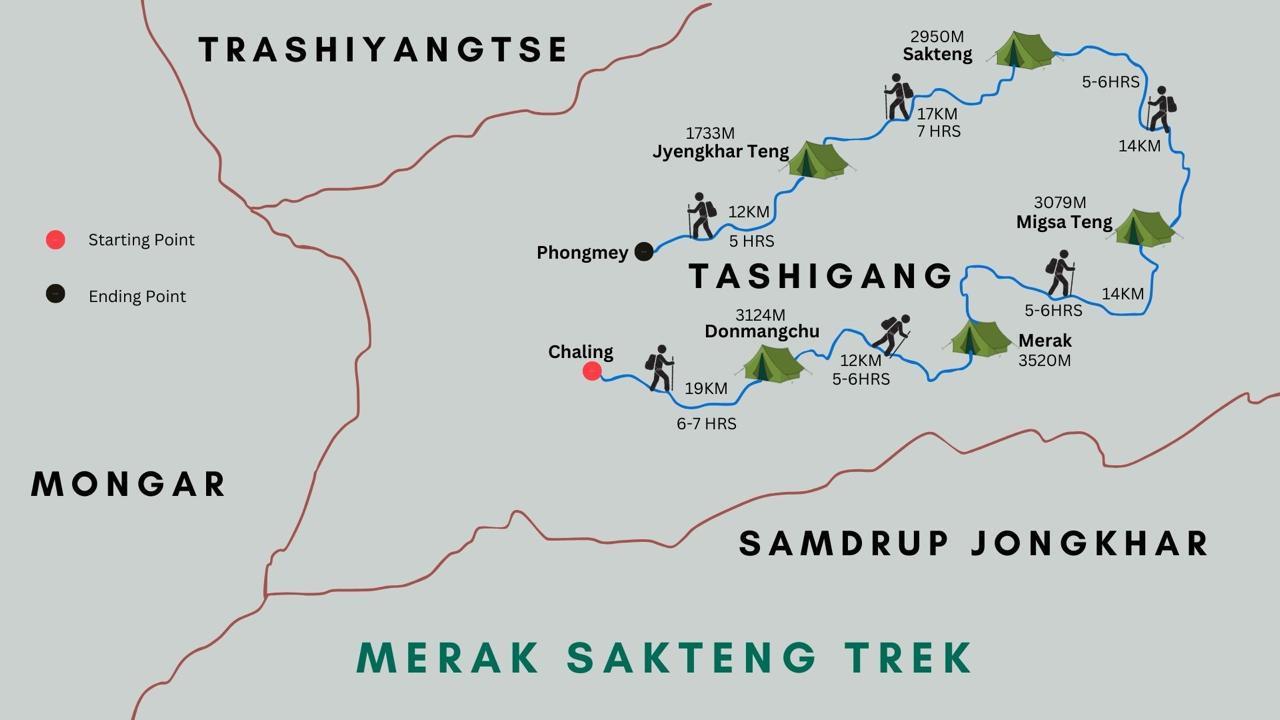
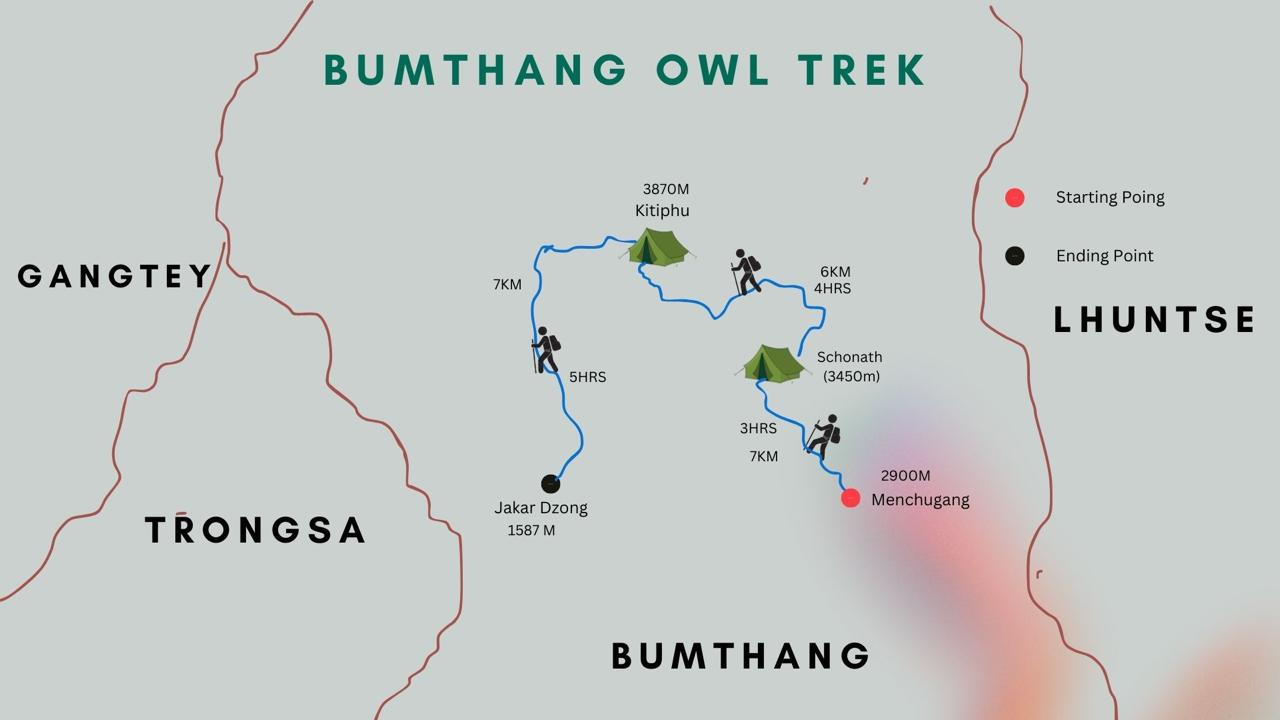
The Snowman Trek Map